Are Cat Tunnels Safe for Kittens? What to Look For
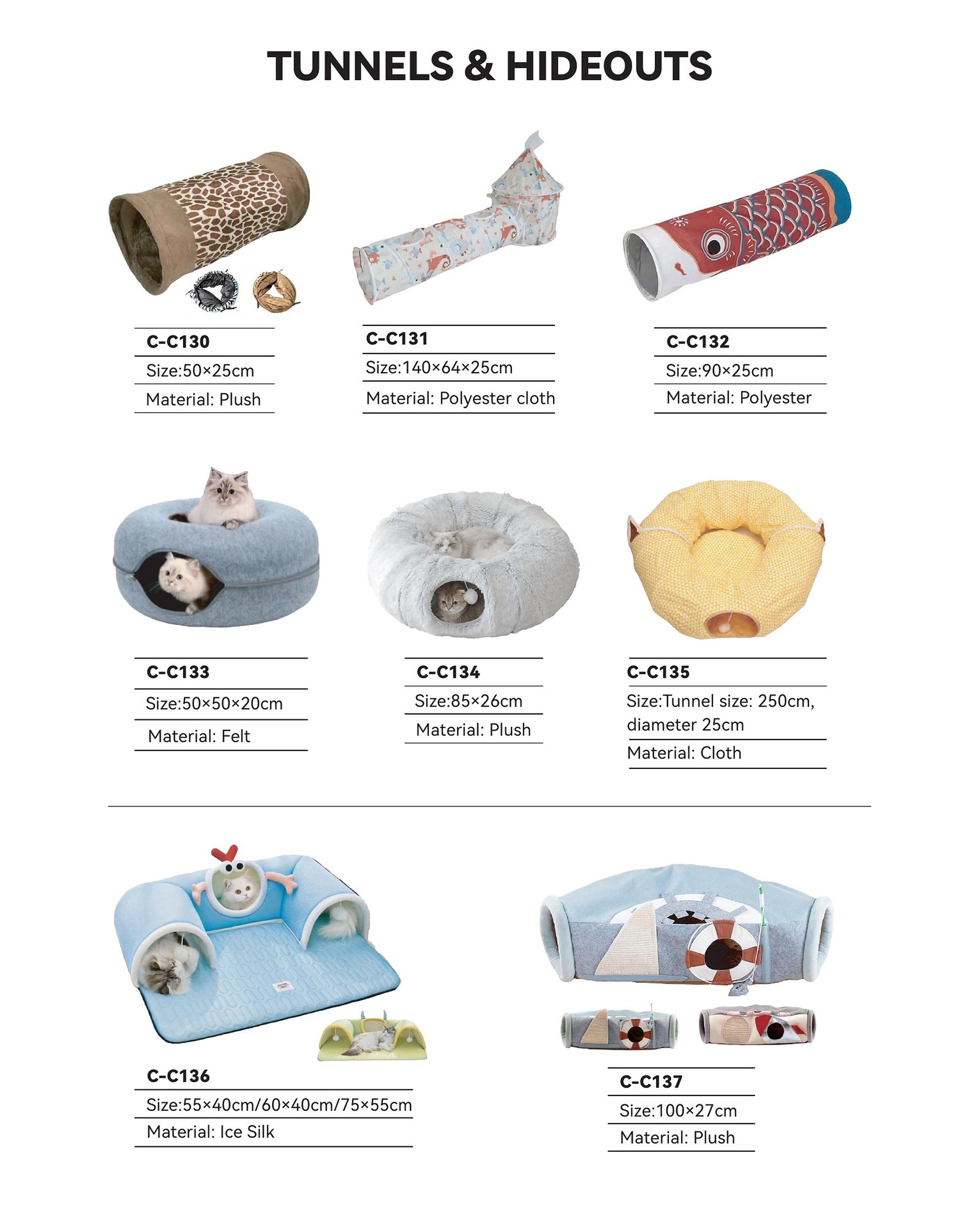
Cat tunnels are some of the most popular toys we make — and some of the easiest to buy badly. A tunnel plays on a cat's strongest instinct: the urge to hide, ambush and pounce. Kittens in particular are drawn to them. But safety depends on design details that aren't obvious at a glance. Here is what we check before a tunnel design leaves our factory, and what you should check before one enters your home.
Tunnels are safe — when the basics are right
There is nothing inherently dangerous about a tunnel. The risks come from three places: the frame, the fabric, and the openings. Get those right and a tunnel is one of the safest toys a kitten can have, because it satisfies the urge to hide without any small parts to swallow.
1. The frame: spring coils and collapse risk
Most pop-up tunnels are built on a spring-steel coil that holds the shape. That coil is the part that needs the most care. In cheap tunnels the coil can push through the fabric over time and scratch a cat — or poke out of a torn seam.
- Look for tunnels where the coil is fully enclosed in a fabric channel, not just resting against the outer layer.
- Check that the fabric is tight around the coil at the ends, where wear happens first.
- When you fold the tunnel for storage, never fold it with the coil under tension against a sharp edge.
2. The fabric: what kittens can chew
Kittens explore with their mouths. A tunnel fabric that is too thin, or that sheds threads, is an invitation to chew — and a chewed tunnel can mean swallowed fibers. We build our tunnels & hideouts with dense, tightly woven fabrics that resist snagging, and we double-stitch every seam so threads can't unravel under normal play.
For kittens specifically:
- Choose a fabric you can't easily pull threads from with a fingernail.
- Avoid tunnels with loose trims, ribbons or dangling attachments — kittens will try to eat them.
- If the tunnel has a crinkle insert, make sure it is sealed inside a pocket, not exposed.
3. The openings: size and visibility
A kitten needs an opening they can exit easily — and quickly, if they get startled. The safest designs have:
- Two or more openings (a tunnel with a single dead-end creates panic when a cat feels trapped).
- An entrance at least as wide as the cat's shoulders, with no stiff edges.
- Windows or peek-holes are a bonus — they let the cat see out and reduce the "trapped" feeling.
4. Supervision and rotation
No toy replaces supervision for the first few play sessions. Watch how your kitten uses the tunnel — some launch themselves at it from furniture, which is exactly the behavior that stresses seams. And like all cat toys, tunnels should be rotated and inspected:
- Check seams, openings and the coil channel every couple of weeks.
- Retire a tunnel at the first sign of a tear, a spring poking through, or loose stitching.
- Wash per the label — tunnels gather dust and fur, and a dirty tunnel gets ignored.
Tunnels in multi-cat households
In homes with two or more cats, a tunnel is a small hideout and a play arena at the same time. Kittens will ambush each other from opposite ends, which is normal play — but it means the tunnel takes more punishment than it would in a single-cat home. Buy one size up, check the seams more often, and if the tunnel has multiple exits, make sure each one opens fully; a partially folded end can trap a chasing kitten's paw mid-pounce. A tunnel with crinkle fabric or a viewing window also lets a second cat see what's happening inside, which reduces surprise confrontations.
The short answer
Yes, cat tunnels are safe for kittens — provided the coil is enclosed, the fabric is chew-resistant, the openings are generous, and you keep an eye on wear. Skip the gimmicks with ribbons and bells hanging inside; the plain, well-made tunnel is the one kittens actually love for years.
If you stock tunnels for a store or brand, these same checks are what your customers will quietly do in their heads. Our tunnels are built to pass them — every batch is checked for stitching, coil coverage and opening width before it ships. See the tunnel range in the catalogue, or email us for wholesale details.
Safe toys, made properly
Browse tunnels, hideouts and 300+ more designs — EN71 / ASTM compliant, samples available.
View Collections Email Sweety