Best Cat Tree Materials: Wood, Sisal, Carpet & Plush Compared
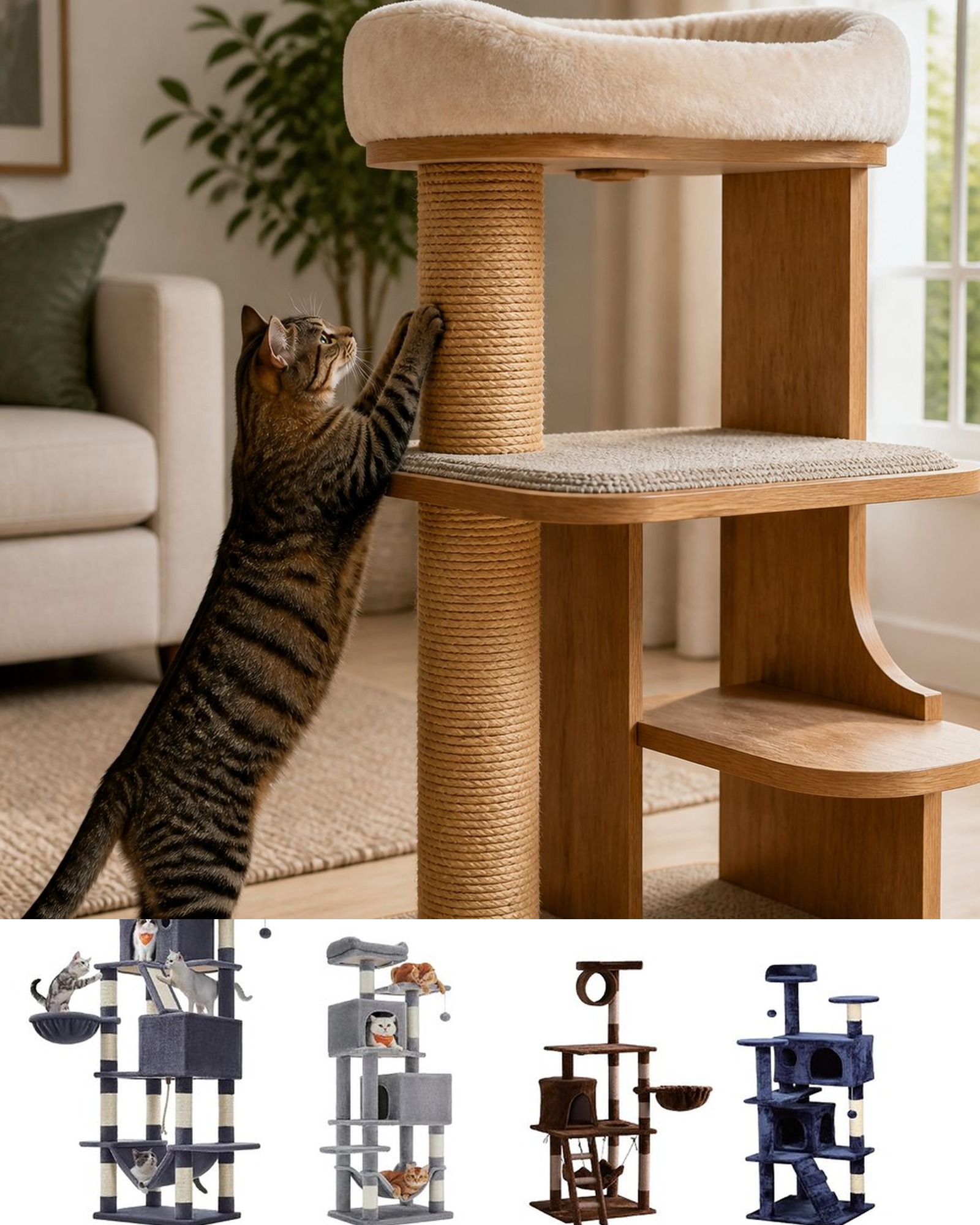
A cat tree is only as good as the materials inside it. Scratching surfaces, frame boards, platform coverings and sleep perches all do different jobs, and the best choice for one household can be the wrong choice for another. At PawMivo we build cat towers every day, so this guide compares the four main cat tree materials — wood, sisal, carpet and plush — so you can choose by durability, cat behavior and cleaning needs.
Cat tree materials at a glance
| Material | Best for | Durability | Cleaning |
|---|---|---|---|
| Solid wood / plywood frame | Large cats, tall towers, multi-cat homes | Very high | Wipe with a damp cloth |
| MDF / engineered board | Mid-range towers, normal-weight cats | Moderate to high | Damp cloth; avoid soaking |
| Sisal rope | Vertical scratching posts | Very high | Brush or vacuum loose fibers |
| Sisal fabric / matting | Horizontal scratchers, ramps, light scratchers | Moderate | Brush or wipe; do not soak |
| Low-pile carpet | Platforms, steps, grip | High | Vacuum regularly, spot-clean |
| Short-pile plush / fleece | Sleep perches, condos, warmth | Moderate | Vacuum, lint roller, removable covers help |
Wood: the frame that carries everything
The hidden frame determines whether a cat tree wobbles, sags or tips over. Not all "wood" frames are equal:
- Solid wood. Strongest and most moisture-resistant. Best for large breeds, multi-cat use and tall towers where leverage matters. It costs more and weighs more, but it is the longest-lasting frame material.
- Plywood (multi-layer board). A strong middle-ground choice. Thick plywood resists warping and holds screws better than particle board. Look for 12 mm or thicker layers in load-bearing parts.
- MDF (medium-density fibreboard). Smooth, easy to cover and cost-effective. It can perform well when it is at least 15 mm thick and used in low-stress areas. It does not handle moisture or repeated impact as well as plywood or solid wood.
- Particle board. The lightest and cheapest option. It can sag under a heavy cat or loosen around screws over time. Best suited to small, low, budget units rather than tall towers.
Sisal: rope versus fabric
Sisal is a natural plant fiber that feels like tree bark under a cat's claws. It is the material that turns a piece of furniture into a scratcher. Sisal comes in two forms, and neither is automatically better for every situation.
- Sisal rope. Wound tightly around a post, rope gives cats a deep grip and usually lasts longer. It is the better choice for vertical posts used by heavy or frequent scratchers.
- Sisal fabric / matting. A flat woven sheet. It can work well on horizontal scratchers, ramps and light-use posts, and it is often cheaper. The trade-off is faster surface wear and less claw depth.
Whichever form you choose, check the winding or attachment. Rope should be tight and edge-to-edge with no exposed wood showing through. Fabric should lie flat with no bubbles or loose corners a cat can peel up.
In our cat tower collection, primary posts use natural sisal rope with dense, gap-free winding — the same specification we apply to OEM and private-label orders.
Carpet: grip and everyday durability
Carpet covers most platforms, steps and ramps because it hides claw marks, gives cats a non-slip launch surface and tolerates years of traffic. The key detail is pile length and attachment. Low-pile carpet is easier to vacuum and less likely to snag claws than high-pile shag. A well-made tree wraps carpet under the platform edges and secures it with glue plus hidden staples, not loose corners that become chew toys.
Plush and faux fur: the comfort layer
Plush, fleece and faux fur cover the places where cats sleep — perches, condos, hammocks and baskets. A short, dense pile is usually better than long fur: it stays cleaner, sheds less, and gives older cats a stable surface to step on. If the backing is slippery, the perch can feel insecure, so look for a non-slip or textured underside. Removable, washable covers are a big plus for households with allergies or heavy shedders.
Matching materials to your cat
The best cat tree material depends on who will use it:
- Aggressive scratcher: choose extra sisal rope posts, including at least one tall vertical post for a full-body stretch.
- Large breed (e.g., Maine Coon, Ragdoll): prioritize a solid wood or thick plywood frame, wide platforms and short-pile or carpeted sleep surfaces that will not compress under weight.
- Senior or mobility-limited cat: add carpeted steps, low perches and plush surfaces close to the ground; avoid slick faux fur backings.
- Kitten household: look for tightly woven carpet, short plush and no dangling fabric threads that tiny claws can snag or swallow.
- Multi-cat home: stability wins. A wide base, heavy frame and durable sisal rope will survive chase sessions better than any comfort feature.
Cleaning and maintenance by material
- Wood / board frames: wipe with a barely damp cloth; dry immediately. Never soak MDF or particle board.
- Sisal: brush or vacuum loose fibers. Spot-clean with a damp cloth, but do not saturate natural fiber.
- Carpet: vacuum weekly; treat stains with enzyme-based pet cleaner.
- Plush / fleece: vacuum, lint-roll or machine-wash if the cover is removable. Choose short pile to reduce matting.
Safety and compliance: what the standards actually mean
EN71 and ASTM F963 are toy safety standards, not blanket certifications for an entire cat tree. They apply most directly to small, toy-like components such as hanging plush attachments, balls, pom-poms or dangly parts — not to the structural frame, sisal posts or large platforms. When a manufacturer mentions EN71 or ASTM F963, ask exactly which components were tested and request test reports for the materials and attachments rather than assuming the whole unit is certified.
Beyond standards, practical safety matters: no exposed staples, no peeling fabric corners, stable base, and weight capacity suitable for your cat.
Pre-purchase quality checklist
- Frame material and thickness listed (solid wood, plywood, MDF ≥15 mm, or particle board).
- Sisal rope is tightly wound edge-to-edge, or sisal fabric is securely attached.
- Carpet and plush have no loose seams, staples or peeling corners.
- Base footprint is wide enough for the height; heavier base is better for tall trees.
- Little or no chemical smell when unpacked.
- Component-level test reports available if safety claims are made.
B2B specification checklist
If you are sourcing cat trees for retail or a private-label brand, put these details in your RFQ:
- Frame material and board thickness (e.g., 15 mm MDF, 12 mm plywood, or solid wood).
- Sisal type and winding density (rope diameter, turns per cm, glue fixation).
- Carpet grade and pile height; plush pile length and backing type.
- Base dimensions and total unit weight.
- Finish requirements: edge sealing, corner rounding, non-toxic glue.
- Component-level testing scope and reports.
- Packaging: flat-pack or assembled, retail box artwork, barcode/label needs.
Frequently asked questions
What is the best material for a cat tree?
There is no single best material. The ideal cat tree combines a rigid wood-based frame, sisal for scratching, carpet for grip and plush for sleeping. The right mix depends on your cat's size, age, scratching style and your cleaning preferences.
Is sisal rope better than sisal fabric?
Sisal rope is generally more durable and better for vertical posts and heavy scratchers. Sisal fabric can be a practical choice for horizontal pads, ramps and light scratchers. Neither is universally superior.
Is solid wood better than MDF?
Solid wood and plywood are stronger and more moisture-resistant, especially for large cats and tall towers. MDF can work well when thick and properly sealed, but it is less durable than solid wood or plywood.
What fabric is easiest to clean?
Short-pile carpet and smooth faux suede or fleece are easiest to vacuum and spot-clean. Long faux fur traps hair and is harder to maintain.
Do cat trees need EN71 or ASTM F963 certification?
EN71 and ASTM F963 are toy safety standards, mainly relevant to small toy-like attachments. They are not blanket certifications for an entire cat tree structure. Ask which components were tested and request the corresponding reports.
Can I customize materials for my own cat tree brand?
Yes. At PawMivo we customize frame type, sisal density, carpet grade, plush pile, colors and packaging for OEM and ODM orders. Samples are available before bulk, and MOQs are flexible by category.
Buying in bulk or building a brand?
Material choice is also a selling story. "Solid wood frame, natural sisal rope, low-pile carpet, short-plush perches" is the spec list experienced buyers look for. We produce cat towers across all material combinations and can adjust every detail to your target price point. Browse the towers collection or email us for a quote with samples.
Explore the tower range
Solid frames, natural sisal and pet-safe fabrics — 300+ designs, samples available.
View Cat Towers Email Sweety