How to Choose the Right Cat Tower for Your Home
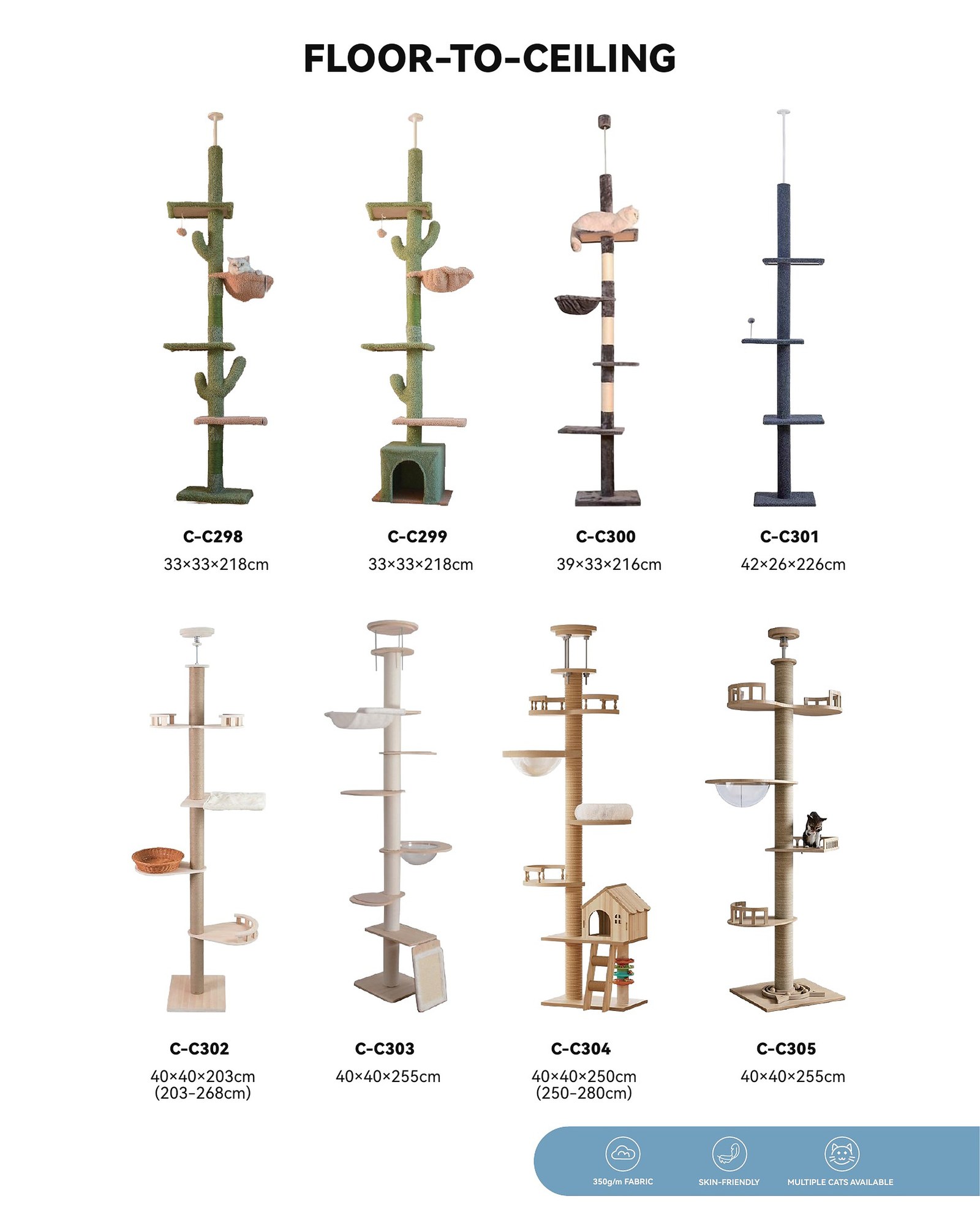
A cat tower is one of the few pet purchases that genuinely changes how your cat uses your home. It gives them height to survey the room, a place to scratch, a nap spot, and a private corner all in one piece of furniture. But towers come in every size, shape and price, and a badly chosen one usually ends up ignored — or worse, tipped over.
We build cat towers at scale for brands and retailers around the world, which means we also test a lot of them. Here are the six things we check before any design goes into production, in the order you should think about them when shopping.
1. Start with height, but respect your ceiling
Height is the single biggest factor in how a tower gets used. Young, energetic cats climb to the top for the view; older cats mostly want the middle platform. If your cat is under two years old, aim for a tower at least 120 cm tall — they will use the top perch constantly. For kittens and senior cats, a compact tower around 60–90 cm is easier to reach and feels safer.
Before you fall for a 180 cm showpiece, measure your ceiling and think about where the tower will live. A tower that has to sit under a low light fixture or a ceiling fan is a disappointment for everyone.
2. Stability comes before everything
This is the rule we refuse to compromise on: a tower must not wobble, even with a cat launching off the top perch. In our factory, every tall tower gets a base test — we simulate a running cat hitting the structure at speed. If the base isn't wide enough or the weight distribution is wrong, the design goes back.
3. Scratching surfaces are the real job
Most cats scratch a tower far more than they climb it. The scratching surface matters more than the silhouette. Sisal rope is the gold standard — it satisfies the urge to scratch and lasts. Check that the main posts are wrapped in real sisal, not printed fabric that looks like sisal from a distance.
Our towers and condos use dense natural sisal on the weight-bearing posts, and we hear from customers that the scratch posts are what their cats gravitate to first.
4. Perches, beds and hideouts: match them to the cat
Cats use different parts of a tower depending on their personality. An outgoing cat lives on the top perch. A shy cat wants a covered cubby at the bottom. A cat that likes windows will pick a perch that faces one. Look for:
- A plush top perch or bowl that is wider than your cat's body (they like to sprawl, not fold).
- At least one enclosed hideout at a middle or lower level for retreating.
- Removable, washable cushion covers — they will need washing, regularly.
5. Think about your whole household
Multi-cat homes should look for towers with two or more perches at different heights so each cat can claim a level without a fight. Kitten households benefit from lower platforms and a wider base. If you have a senior cat, a ramp or low step-in platform makes the tower usable rather than decorative. A tower bought for one cat often becomes the second cat's favorite spot — plan for that.
6. Materials and safety checks
Cheap towers sometimes arrive with sharp staples, splintering particleboard, or stuffing that escapes through thin seams. A few things worth checking before you buy:
- All screws and staples are recessed or covered — no exposed metal.
- Particleboard or plywood edges are sealed, so they can't flake.
- Fabrics are dense enough that claws can't pull threads out easily.
- The tower carries a recognized safety standard for pet products (we build to EN71 / ASTM compliance and check every batch).
If you are sourcing towers for your own brand, ask your supplier directly about these points. A factory that can answer them confidently is a factory you can trust for repeat orders.
The one-minute checklist
- Height fits your cat's age and your ceiling.
- Base is wide, tower doesn't wobble at the top.
- Real sisal posts, not printed wraps.
- Top perch bigger than your cat.
- At least one hideout for shy cats.
- Washable covers, sealed edges, no exposed staples.
Choosing well the first time saves you money and saves your cat from a tower they ignore. And if you're buying in bulk for a store or brand, we'd be glad to walk you through our full cat tower range — every design is available with OEM and ODM options.
Browse the catalogue
See 300+ cat toy designs — towers, plush, tunnels, beds and more. Samples available before bulk orders.
View Collections Email Sweety