How to Choose Safe Dog Toys by Size, Chewing Strength and Play Style
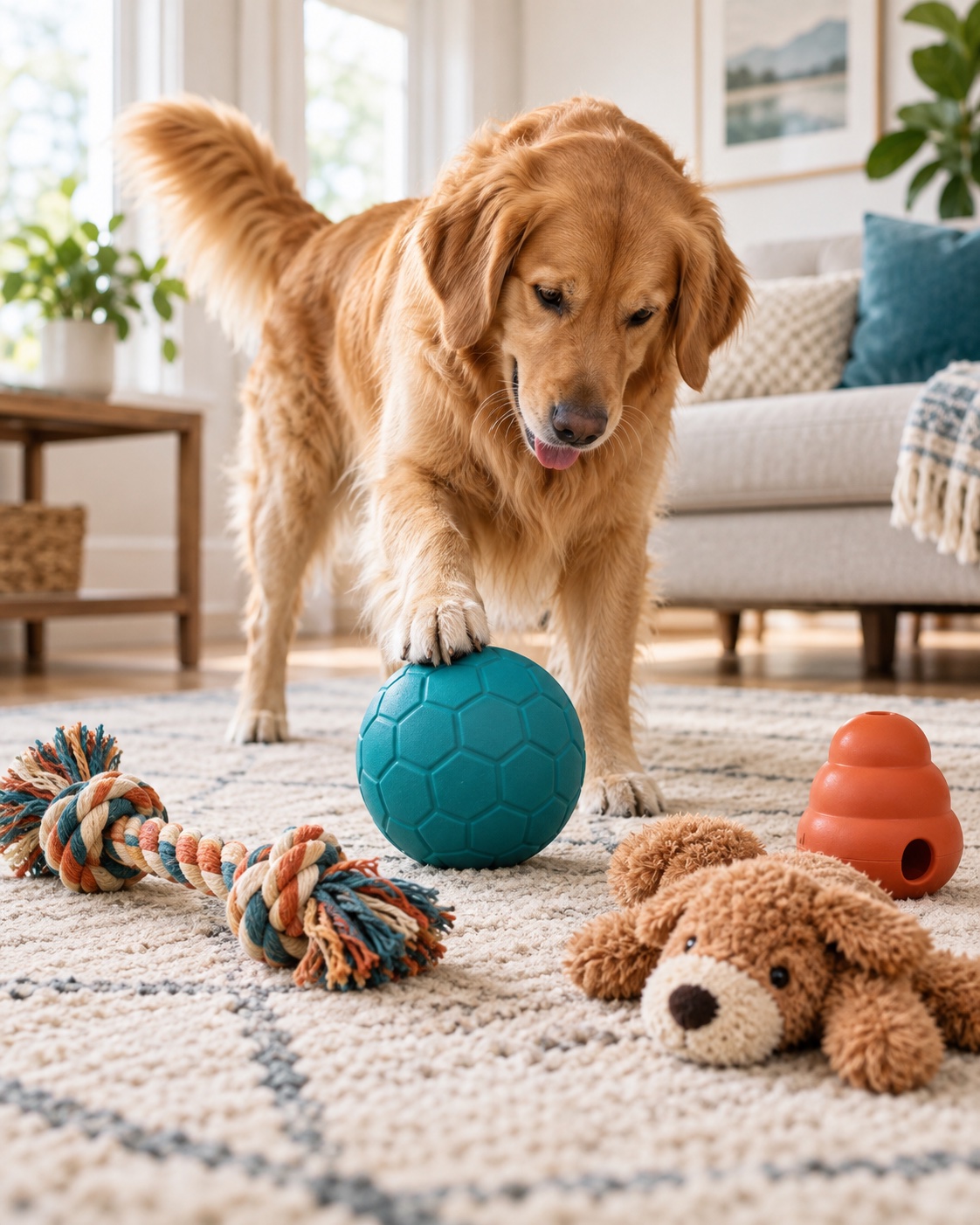
Quick answer
The safest dog toy is correctly sized, suited to the dog's chewing strength and used for the activity it was designed for. A fetch ball should be too large to swallow, a chew toy should resist breaking into chunks, and plush or rope toys should be removed when seams or fibers loosen. Supervise every new toy until you understand how your dog uses it.
There is no single “best dog toy” for every dog. A gentle senior that carries plush toys needs something different from a young power chewer or a retriever that wants to chase a ball. The practical way to choose is to match five variables: size, age, chewing style, play purpose and construction.
1. Start with the dog's real mouth size
Labels such as small, medium and large are useful starting points, but the individual dog matters more. Choose a toy that the dog can pick up comfortably without being able to swallow it or lodge it at the back of the mouth. This is especially important for balls and rounded toys.
For growing puppies, reassess toy size frequently. A ball that was suitable at ten weeks may become too small several months later. Multi-dog homes need another check: a toy sized for the smallest dog may be unsafe when a larger dog gains access to it.
2. Match the toy to chewing strength
| Chewing style | Good starting options | Watch for |
|---|---|---|
| Gentle carrier | Plush toys, soft squeakers, fleece tugs | Opened seams, exposed stuffing or squeakers |
| Moderate chewer | Flexible rubber, TPR, rope used interactively | Cracks, loose fibers and small torn pieces |
| Power chewer | Dense rubber or purpose-designed durable chews in a larger size | Deep cuts, sharp edges, missing chunks and tooth wear |
| Food-motivated dog | Treat-dispensing rubber toys and supervised puzzles | Oversized treat openings, broken lids or swallowed components |
Durable does not mean indestructible. The ASPCA recommends matching chews to the dog's size and chewing habits and removing worn products before thin sections break off. A toy that lasts months for one dog may last minutes for another.
3. Choose by play style—not appearance
Fetch and chase
Use balls and discs that are large enough to resist swallowing and made for canine play. Consider bounce, visibility and whether the toy should float. Fetch toys should be inspected for splits and should not be treated as permanent chew objects unless the product is designed for both jobs. Explore PawMivo's ball and fetch dog toy series.
Chewing and teething
Puppies need appropriately flexible toys that are comfortable on developing teeth. Adult power chewers may need denser rubber or durable chew shapes. Very hard objects can risk tooth damage, so ask a veterinarian when a dog has dental disease, damaged teeth or an unusually intense chewing habit. Compare our chew and treat collections.
Tug and interactive play
Rope and fabric tugs work best as shared play tools. Put them away if a dog shreds and swallows fibers. The toy should be long enough to keep hands away from the dog's mouth and should have secure knots or handles.
Comfort and carrying
Plush toys suit dogs that carry, cuddle or gently squeak. They are a poor match for dogs that immediately dissect toys. Choose reinforced seams and embroidered details, then retire the toy when the inside becomes accessible.
Puzzles and food enrichment
Begin with an easy puzzle so the dog can succeed, then increase difficulty. The toy must still match jaw strength and body size. Puzzle pieces, covers and sliders should remain attached or be too large to swallow. See PawMivo's plush and puzzle dog toys.
4. Check construction before every play session
5. Know when to remove or replace a toy
Replace the toy when it becomes small enough to swallow, sheds chunks, develops sharp edges, exposes filling or internal sound parts, or no longer works as intended. If a dog swallows a piece, chokes, repeatedly coughs, vomits, stops eating or appears painful, contact a veterinarian promptly.
Dog toy selection checklist for buyers and retailers
For pet brands, importers and retailers, the same safety logic should shape assortment planning. Define the intended dog size and play type on packaging, make care and supervision instructions easy to find, and avoid vague “indestructible” claims. A balanced range usually includes multiple sizes, several material densities and clear choices for fetch, chewing, comfort, tug and enrichment.
PawMivo develops wholesale dog toy collections with OEM, ODM and private-label options. Buyers can request custom sizes, materials, colors, features and packaging based on the target market.
Frequently asked questions
How do I choose the right size dog toy?
Choose a toy that is too large to swallow yet comfortable to carry. Match it to the individual dog's mouth, body size and chewing behavior, then reassess as a puppy grows.
What dog toys are best for heavy chewers?
Dense rubber or purpose-designed durable chews are common starting points. No toy is indestructible, so supervise use and replace the toy before pieces loosen.
Are plush dog toys safe?
They can suit gentle carriers and comfort-seeking dogs. Remove the toy if seams split or stuffing, squeakers or other internal parts become accessible.
Should dogs be supervised with toys?
Yes—especially with a new toy, a strong chewer, or toys containing fibers, stuffing, squeakers, food or detachable components.
When should a dog toy be replaced?
Replace it when it cracks, becomes small enough to swallow, develops sharp edges, exposes filling or squeakers, or sheds fibers or chunks.
Sources and further reading
Building a safer dog toy range?
Tell us the dog sizes, play styles, materials, quantities and branding you need. We can recommend existing series or develop a custom OEM/ODM program.
Browse Dog ToysRequest the Catalog