Pet Toy MOQ: How to Plan Your First Private-Label Order
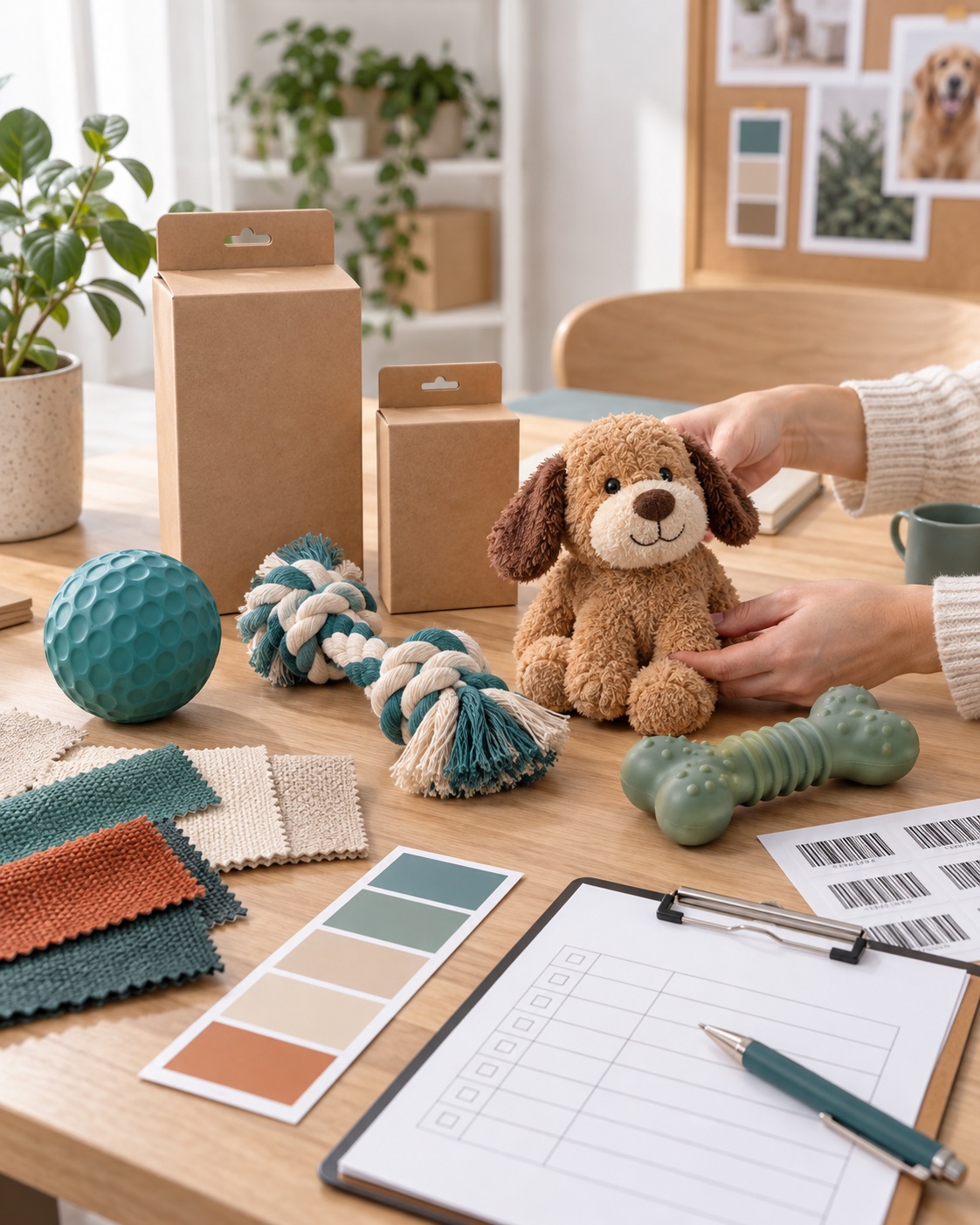
Quick answer
Pet toy MOQ is not one fixed number. It usually changes with the product construction, material, color, size, logo method, packaging and whether you select an existing design or develop a new one. Before comparing quotations, ask whether the minimum applies per design, per color, per size, per SKU or across the complete order.
“What is your MOQ?” is usually the first question a private-label buyer asks—and one of the easiest questions to answer incorrectly. A low headline minimum may apply only to one stock design in one color with neutral packaging. The same toy offered in three colors, two sizes and a printed box can create six SKUs plus a separate packaging minimum.
For a new Shopify store, Amazon seller, subscription box or independent pet shop, the goal is not simply to find the lowest MOQ. The goal is to build a first order that is large enough to manufacture reliably, but focused enough to sell through without tying up too much cash in slow-moving variants.
1. What does pet toy MOQ actually mean?
MOQ means minimum order quantity: the smallest production quantity that makes a particular specification workable. A supplier may need to buy material, set up cutting or molding equipment, prepare logo artwork, configure stitching, and order printed packaging before production begins. Those setup steps are why a minimum exists.
Ask the supplier which of these four layers controls the quote:
- Product MOQ: the minimum for one toy design or construction.
- SKU MOQ: the minimum for each combination of color, size and style.
- Component MOQ: the minimum imposed by a special fabric, rope, squeaker, molded part or custom color.
- Packaging MOQ: the minimum for printed boxes, pouches, hangtags, inserts, barcode labels or master cartons.
2. Why MOQ changes by dog toy category
Different toys use different production processes, so a single MOQ across an entire catalog is rarely meaningful.
Plush and fabric toys
Plush toys involve fabric cutting, embroidery or printing, filling, squeakers and sewing. Existing shapes with a standard fabric and a simple woven label are normally easier to start than a completely new character requiring patterns, embroidery files and several custom materials. Explore the range in our plush, durable and puzzle dog toy collection.
Rope toys
Rope programs may be influenced by rope diameter, fiber, color combination, knotting process and attached components. Restricting the first order to one or two colorways can simplify material purchasing. See our rope dog toy series.
Molded rubber, TPR and chew toys
Choosing an existing mold is different from creating a new shape. A custom molded toy may require design review, tooling, sampling and color matching before bulk production. For a first launch, an existing platform with a custom color, logo or package can reduce development complexity. Compare options in chew and treat dog toys and ball and fetch dog toys.
Electronic or multi-component products
Products with batteries, lights, sound modules or several purchased components need tighter specification control. Component availability, target-market requirements and assembly testing can affect both minimums and timing.
3. Private label, OEM or ODM: choose the right starting level
Customization level is one of the strongest MOQ drivers. Buyers sometimes request full OEM or ODM development when a simpler private-label launch would test the market faster.
If your brand is still proving demand, begin with the least complex route that delivers a meaningful point of difference. Our private-label pet toy manufacturing guide explains the three approaches in more detail.
4. A lower-risk first-order plan
Step 1: Estimate demand by SKU, not by category
“Dog toys” is not a forecast. A teal medium rope tug and an orange large rope tug are separate inventory positions. Estimate likely sales for each color and size, then decide how many weeks or months of stock you are comfortable holding.
Step 2: Start with fewer variants
Every additional color, size and package can create another minimum. A focused launch of two or three clear winners is easier to photograph, advertise and reorder than a broad line with thin inventory behind every SKU.
Step 3: Separate must-haves from nice-to-haves
List your non-negotiables—perhaps material, size and logo—separately from optional changes such as custom hardware, an exclusive color or a fully printed box. Ask the supplier to quote the base version and optional upgrades independently.
Step 4: Check packaging before approving the toy
A product order can be workable while its printed packaging is not. Confirm artwork size, print method, barcode responsibility, warning or traceability information, carton configuration and packaging minimum before approving the final sample.
Step 5: Approve a written specification and physical sample
The approved sample should connect to a written specification covering materials, measurements, colors, attachments, logo position and packaging. If a material or component changes, review whether the change affects performance, labeling or any market-specific requirements.
Step 6: Plan the reorder before the first shipment
Ask how repeat orders are scheduled, which materials have longer replenishment times and whether unused packaging can be carried into the next production run. A first order is safer when the reorder path is clear.
5. Compliance questions belong in the first quote
Your destination market, sales channel and product design determine which legal or platform requirements may apply. Do not assume that a generic certificate covers every material, color or modified design.
For U.S. sales, the Consumer Product Safety Commission advises manufacturers and importers to identify applicable rules, maintain an appropriate testing approach when a rule applies, and reassess products after material changes. In the EU, the General Product Safety Regulation provides the general safety framework for non-food consumer products, including products sold online. Requirements should be scoped for the exact product and market with qualified compliance support.
Before ordering, ask what material declarations, test reports, traceability information, labeling inputs and change-control records are available. This article is commercial sourcing guidance, not legal advice.
6. Information to include in your first inquiry
A precise brief receives a more useful quotation. Send:
- Product category, catalog item code or reference image
- Target quantity and expected number of SKUs
- Colors, sizes and material preferences
- Logo method and packaging format
- Destination country and sales channel
- Required delivery window
- Documentation or testing questions for your target market
Frequently asked questions
What is the MOQ for private-label pet toys?
There is no universal number. It depends on product construction, materials, colors, sizes, branding, packaging and whether you use an existing design or develop a new one. PawMivo confirms MOQ against the selected item and customization brief.
Is pet toy MOQ calculated per SKU or per total order?
It can be either. Per-SKU minimums are common because each design, size or color may require separate materials and setup. Ask for the structure in writing before finalizing your assortment.
How can a small pet brand reduce first-order risk?
Begin with fewer SKUs, select an existing product platform, limit colors and sizes, and use a simpler branding or packaging treatment. Add custom tooling and more variants after real sales data supports them.
Does custom packaging have a separate MOQ?
Often yes. Printed boxes, pouches, inserts, hangtags and barcode labels may each carry a supplier minimum. Request separate product and packaging breakdowns.
What should I send for an accurate quote?
Send the item or category, quantity, colors, sizes, logo method, packaging concept, destination market, delivery window and any documentation requirements. The clearer the brief, the fewer assumptions the supplier must make.
Sources and further reading
Planning your first private-label pet toy order?
Send us the product codes or categories, target quantities, market, logo and packaging ideas. We will confirm the practical MOQ structure, sample route and quotation for your project.
Browse Dog Toy SeriesEmail Sweety — sweety@pawmivo.com