Are Cat Tunnels Safe for Kittens? What to Look For
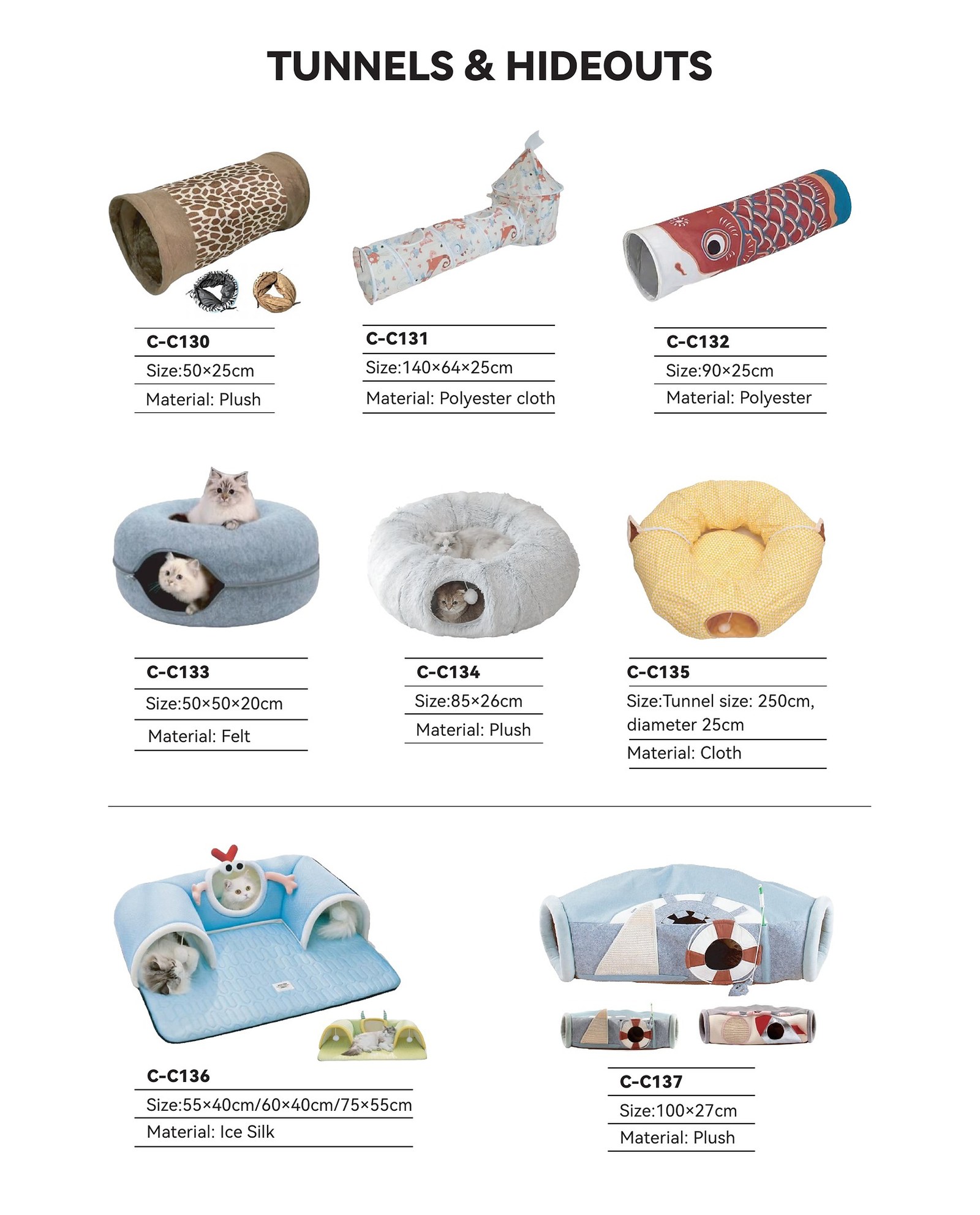
A tunnel offers places to hide, stalk and pounce, but safety depends on details that are not obvious at a glance. Before selecting a model for your home or store, examine its frame, fabric, openings and any attachments. The following points are practical selection checks, not evidence that every product or shipment has passed a particular test.
Tunnels are safe — when the basics are right
A suitable tunnel can provide space for play and retreat, but no design is risk-free. Frame condition, fabric, openings, attachments and the individual kitten's size and behaviour all matter. Inspect the actual product and follow its instructions rather than relying on a general safety claim.
1. The frame: spring coils and collapse risk
Most pop-up tunnels are built on a spring-steel coil that holds the shape. That coil is the part that needs the most care. In cheap tunnels the coil can push through the fabric over time and scratch a cat — or poke out of a torn seam.
- Look for tunnels where the coil is fully enclosed in a fabric channel, not just resting against the outer layer.
- Check that the fabric is tight around the coil at the ends, where wear happens first.
- When you fold the tunnel for storage, never fold it with the coil under tension against a sharp edge.
2. The fabric: what kittens can chew
Kittens explore with their mouths. A tunnel fabric that sheds threads or tears can create an ingestion hazard. When selecting tunnels & hideouts, inspect the actual sample's fabric, seams and coil covering. Ask for construction details for your chosen model; do not assume all fabrics resist snagging or all seams use the same stitching.
For kittens specifically:
- Choose a fabric you can't easily pull threads from with a fingernail.
- Avoid tunnels with loose trims, ribbons or dangling attachments — kittens will try to eat them.
- If the tunnel has a crinkle insert, make sure it is sealed inside a pocket, not exposed.
3. The openings: size and visibility
A kitten needs an opening they can exit easily — and quickly, if they get startled. The safest designs have:
- Two or more openings (a tunnel with a single dead-end creates panic when a cat feels trapped).
- An entrance at least as wide as the cat's shoulders, with no stiff edges.
- Windows or peek-holes are a bonus — they let the cat see out and reduce the "trapped" feeling.
4. Supervision and rotation
No toy replaces supervision for the first few play sessions. Watch how your kitten uses the tunnel — some launch themselves at it from furniture, which is exactly the behavior that stresses seams. And like all cat toys, tunnels should be rotated and inspected:
- Check seams, openings and the coil channel every couple of weeks.
- Retire a tunnel at the first sign of a tear, a spring poking through, or loose stitching.
- Wash per the label — tunnels gather dust and fur, and a dirty tunnel gets ignored.
Tunnels in multi-cat households
In homes with two or more cats, a tunnel is a small hideout and a play arena at the same time. Kittens will ambush each other from opposite ends, which is normal play — but it means the tunnel takes more punishment than it would in a single-cat home. Buy one size up, check the seams more often, and if the tunnel has multiple exits, make sure each one opens fully; a partially folded end can trap a chasing kitten's paw mid-pounce. A tunnel with crinkle fabric or a viewing window also lets a second cat see what's happening inside, which reduces surprise confrontations.
The short answer
A tunnel may be suitable for a kitten when the coil is protected, the fabric is intact, openings fit the animal and play is supervised. No fabric should be assumed impossible to chew. Avoid loose attachments and remove damaged products. These checks reduce obvious hazards but do not guarantee safety or a particular service life.
If you stock tunnels for a store or brand, turn these checks into a written sample and inspection checklist. Ask for model-specific information on stitching, coil coverage and opening dimensions, and agree the inspection scope before ordering. See the tunnel range in the catalog, or email us for wholesale details. This guide does not establish a testing result or guarantee safety for any individual product.
Safe toys, made properly
Browse tunnels, hideouts and 300+ more designs — safety-first construction, samples available.
View Collections Email Sweety