Cat Toy Materials to Avoid (and What's Actually Safe)
Quick answer
Avoid brittle rigid plastics, ungraded soft vinyl, painted or treated wood, foam-bead fillings, glued-on decorations and long loose strings. Materials with a strong safety track record include dense wool felt, cotton rope, sisal, smooth untreated wood and food-grade silicone — always combined with reinforced seams, enclosed filling and no small detachable parts.
When people evaluate a cat toy, they usually look at the shape: a mouse, a ball, a kicker. But the material decides far more — how the toy ages, how it fails, and what happens if a cat chews through it. Two toys can look identical on a shelf and behave completely differently after a week of real play.
This guide covers the materials we would avoid or treat with caution, the ones that hold up well, and — if you buy for a store or brand — the questions worth asking a supplier before you order.
1. Materials and design details to avoid
No single material is dangerous in every form, but the following are common culprits behind broken toys and unplanned vet visits:
- Brittle rigid plastics. Hard plastic that cracks can shatter into sharp fragments. If a plastic toy cannot flex at all, it is one good bite away from splitting.
- Soft vinyl of unknown grade. Inexpensive soft PVC can carry a strong chemical odor and may contain plasticizers you cannot verify. Food-grade silicone is a more predictable alternative.
- Painted or treated wood. Finishes and dyes are not formulated to be chewed. Untreated, smooth-sanded wood is the safer baseline.
- Polystyrene foam beads. They escape through seams easily, crumble into swallowable pieces and cling to everything.
- Glued-on decorations. Googly eyes, sequins and glitter detach with predictable results. Embroidered details are generally preferable to anything glued.
- Long strings, yarn loops and rubber bands. These add entanglement and linear-ingestion risks — they should never be left on an unattended toy.
2. Materials that hold up well
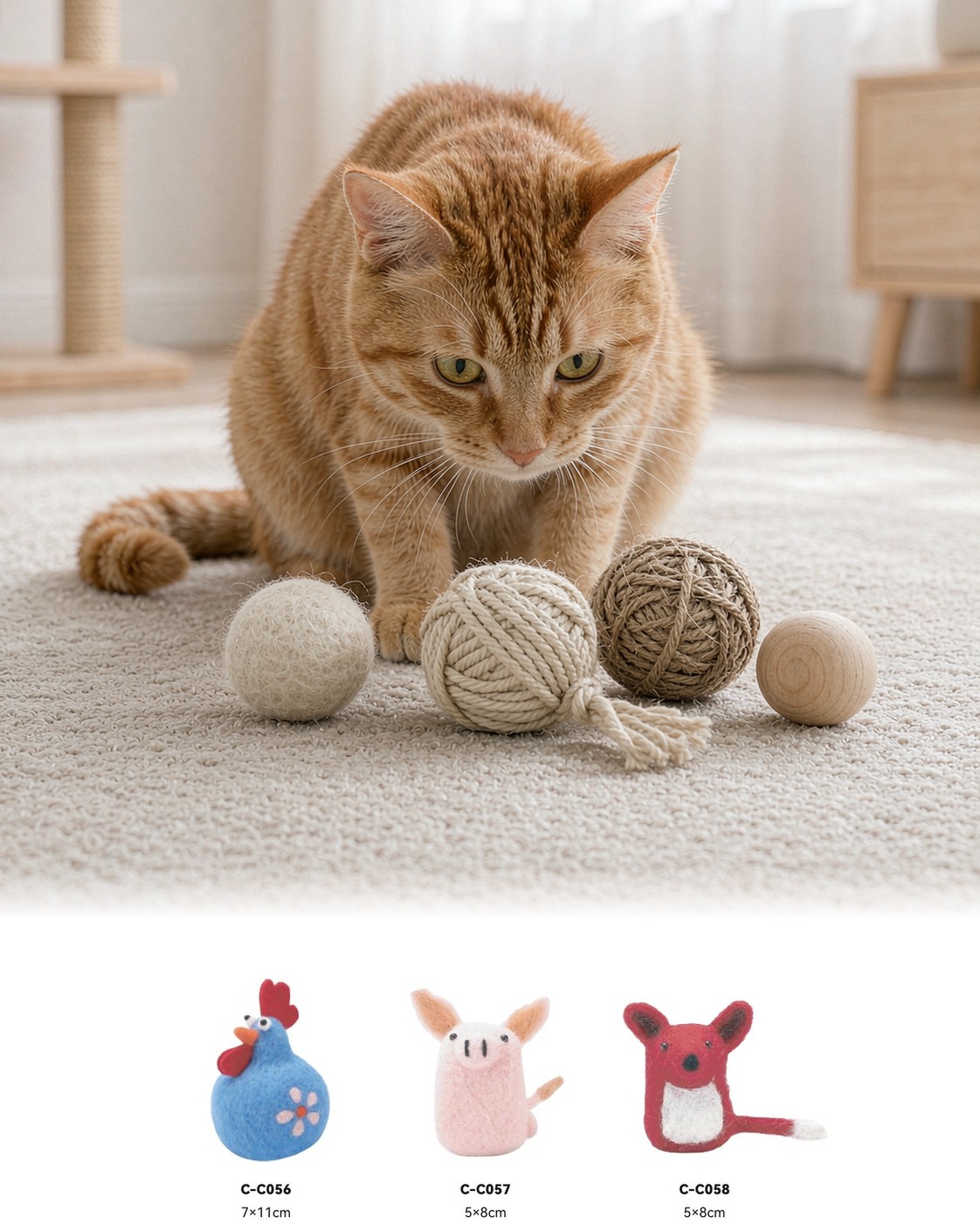
The safest toys tend to combine honest materials with simple construction. These have strong track records for supervised cat play:
- Wool felt. Dense, compacted fibers contain no loose filling and no small parts. Felt also wears visibly, so damage is easy to spot during inspection.
- Cotton rope. Sturdy and chew-friendly; when the fibers start to unravel noticeably, that is your replacement signal.
- Sisal. The classic scratching material — abrasive enough for claws without splintering dangerously.
- Untreated wood. Smooth-sanded hardwood balls and blocks add variety without finishes or dyes.
- Food-grade silicone. Odor-free, easy to wash and forgiving under teeth.
- Durable plush with reinforced seams. Softness is fine if the stitching holds and the details are embroidered rather than glued.
Construction matters as much as the material itself: reinforced stitching, fully enclosed filling and no detachable small parts are what turn a decent material into a safe toy. The same inspection habit applies to catnip designs — see our catnip toy safety guide for how often and how long to offer them.
3. What buyers should confirm with suppliers
If you source toys for a brand or store, material conversations belong in writing. Before committing to an order, ask the supplier to specify:
Suppliers who answer these questions precisely are generally the ones whose toys survive contact with real cats.
4. Safer material options in the PawMivo catalog
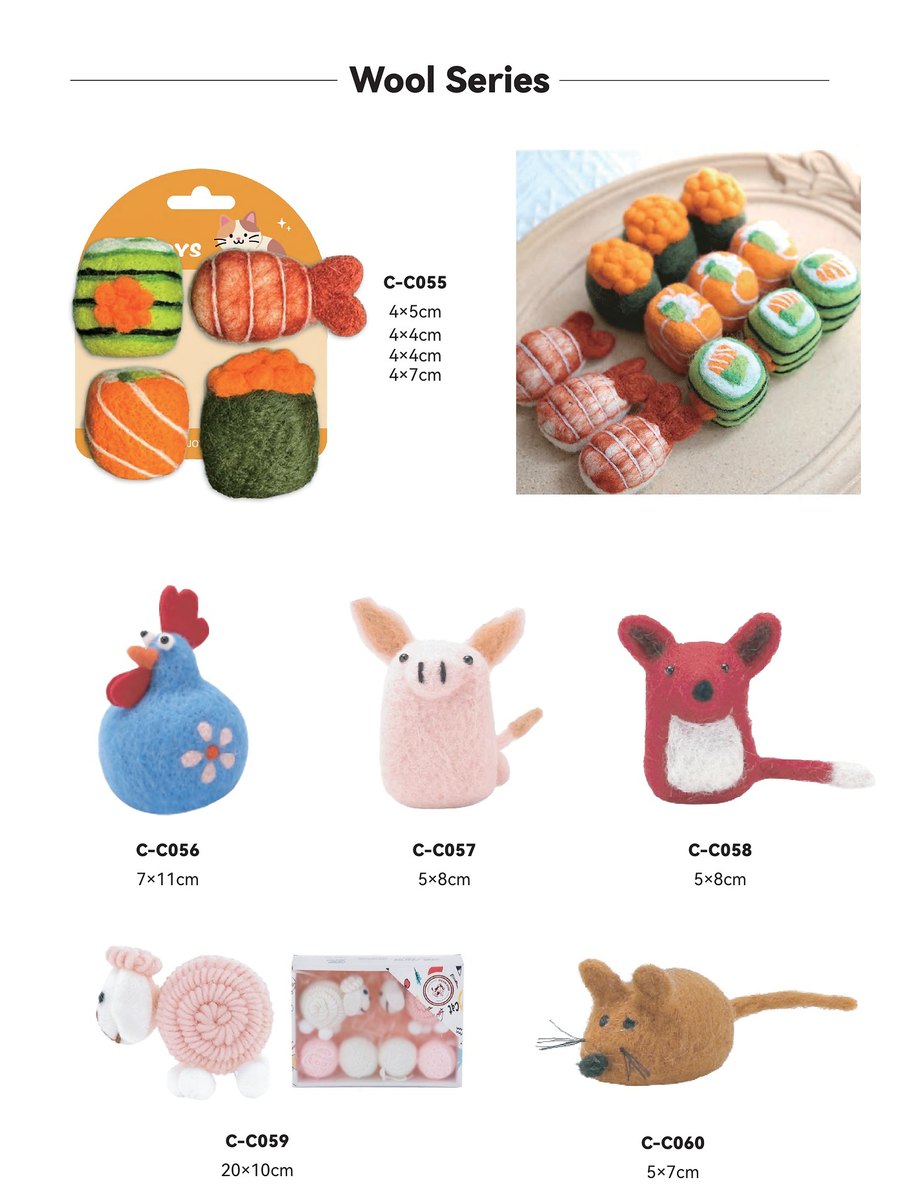
Our chews & dental toy collection is built around the materials above — dense needle-felted wool (the Wool Series, C-C055–C-C060), loofah, cotton and silicone designs. Because we manufacture in-house, material substitutions are part of the conversation rather than an afterthought: OEM and ODM projects can adjust fabric weight, filling, dye and packaging to match your market's expectations.
Frequently asked questions
Are plastic cat toys safe?
Flexible plastics such as polypropylene or TPR are generally reasonable for supervised play. Brittle rigid plastics that can crack into sharp pieces are better avoided. Inspect regularly and retire anything that chips or develops sharp edges.
What is the safest material for cat toys?
There is no single safest option. Dense wool felt, cotton rope, sisal, smooth untreated wood and food-grade silicone all perform well when the construction is sound — reinforced seams, no glued small parts, no long exposed strings — and the size suits the cat.
Are wool felt toys safe for cats?
Needle-felted wool toys are among the safer choices: dense fibers, no loose filling and no glued small parts. Supervise determined chewers and retire the toy once it starts to unravel.
How do I check a toy's material safety before ordering?
Request a material breakdown by component, order a sample, pull-test the seams and attachments, and confirm test documentation is available on request. Vague material answers are themselves useful information.
Sources and further reading
This article summarizes general safety guidance; it is not a diagnosis or a substitute for veterinary care.
If your cat may have swallowed part of a toy, or shows persistent vomiting, diarrhea, severe lethargy or trouble breathing, contact your veterinarian or an animal poison-control service promptly.
Build a toy line on safer materials
Tell us the materials, sizes and branding you need. We recommend existing series or develop custom OEM/ODM programs — samples available before bulk, flexible MOQ by category.
View Chews & Dental ToysRequest the Catalog