Is Catnip Safe for Cats? A Practical Catnip Toy Safety Guide

A catnip toy can turn a quiet cat into a rolling, rubbing, bunny-kicking comedian in seconds. It can also raise reasonable questions: Is catnip safe? How much is too much? What should you do if your cat eats the herb or tears open the toy?
The useful answer is not a rigid weekly number. Many cats can enjoy catnip safely, but reactions vary, ingestion can cause digestive upset, and the toy's construction matters just as much as the herb inside it. This guide separates the well-supported facts from the rules of thumb.
What catnip does to cats
Catnip (Nepeta cataria) contains nepetalactone, a compound that cats detect through scent. In responsive cats, it can trigger rolling, face rubbing, chewing, vocalizing, bursts of play or relaxation. Pet Poison Helpline reports that the noticeable response commonly lasts around 10–15 minutes, followed by a temporary period of reduced response.
Not every cat reacts. Genetics influence sensitivity, and young kittens often show little or no response. That means a cat ignoring a catnip toy is normal—it does not necessarily mean the herb or toy is poor quality.
Is catnip safe for cats?
For many cats, a modest amount of catnip used during supervised play is low risk. However, “natural” does not mean unlimited. The ASPCA notes that catnip can cause vomiting or diarrhea, particularly when a cat eats more than a small amount. Some cats become stimulated, while others become sedated.
The safest approach is simple: offer a small amount, observe your cat's individual response, and prevent access to a large pouch or container of loose catnip. If vomiting, diarrhea, marked lethargy or unusual behavior is persistent or severe, contact your veterinarian.
How often should cats use catnip toys?
There is no single medically defined schedule that suits every cat. A practical routine is to offer the toy for a short supervised session, remove it when your cat loses interest, and rotate it with non-catnip toys. Some cats enjoy catnip more frequently; others become overstimulated or stop responding when the toy is always available.
Instead of counting exact weekly sessions, use your cat's behavior as the limit:
- Stop if play changes from enthusiastic to agitated or aggressive.
- Remove the toy when your cat starts tearing at seams or eating loose material.
- Give your cat a break if interest fades rather than adding more catnip.
- Choose ordinary chase, puzzle or wand play on non-catnip days.
Keeping the toy in a sealed container between uses can help preserve aroma and novelty. The same rotation principle can revive other toys too; see our guide to why cats ignore their toys.
When should you stop the session?
End play and put the toy away if you notice:
- growling, redirected biting, persistent swatting or difficulty settling;
- repeated chewing that could open the fabric;
- vomiting, diarrhea or unusual sleepiness after exposure;
- stuffing, catnip or internal components becoming accessible.
VCA also advises against using catnip toys when they make a cat agitated. If your cat swallowed stuffing, string, a bell or another toy component, contact a veterinarian promptly rather than waiting for symptoms.
What makes a catnip toy safer?
A safe catnip routine still depends on a well-made toy. When comparing products, inspect the parts a cat will bite, kick and pull:
- Durable fabric and reinforced seams. The filling should remain enclosed during normal supervised play.
- No easily detached decorations. Embroidered details are generally preferable to glued eyes, beads or loosely attached bells.
- No long exposed strings. String-like parts can create entanglement or ingestion hazards and should not be left out unattended.
- Clear filling information. Buyers should know whether a toy contains dried catnip, a catnip blend or a refillable insert.
- A size appropriate for the cat. Kicker toys should be large enough to grip without being swallowed; smaller toys require closer supervision.
No soft toy is indestructible. Inspect catnip toys regularly, discard damaged products, and supervise determined chewers.
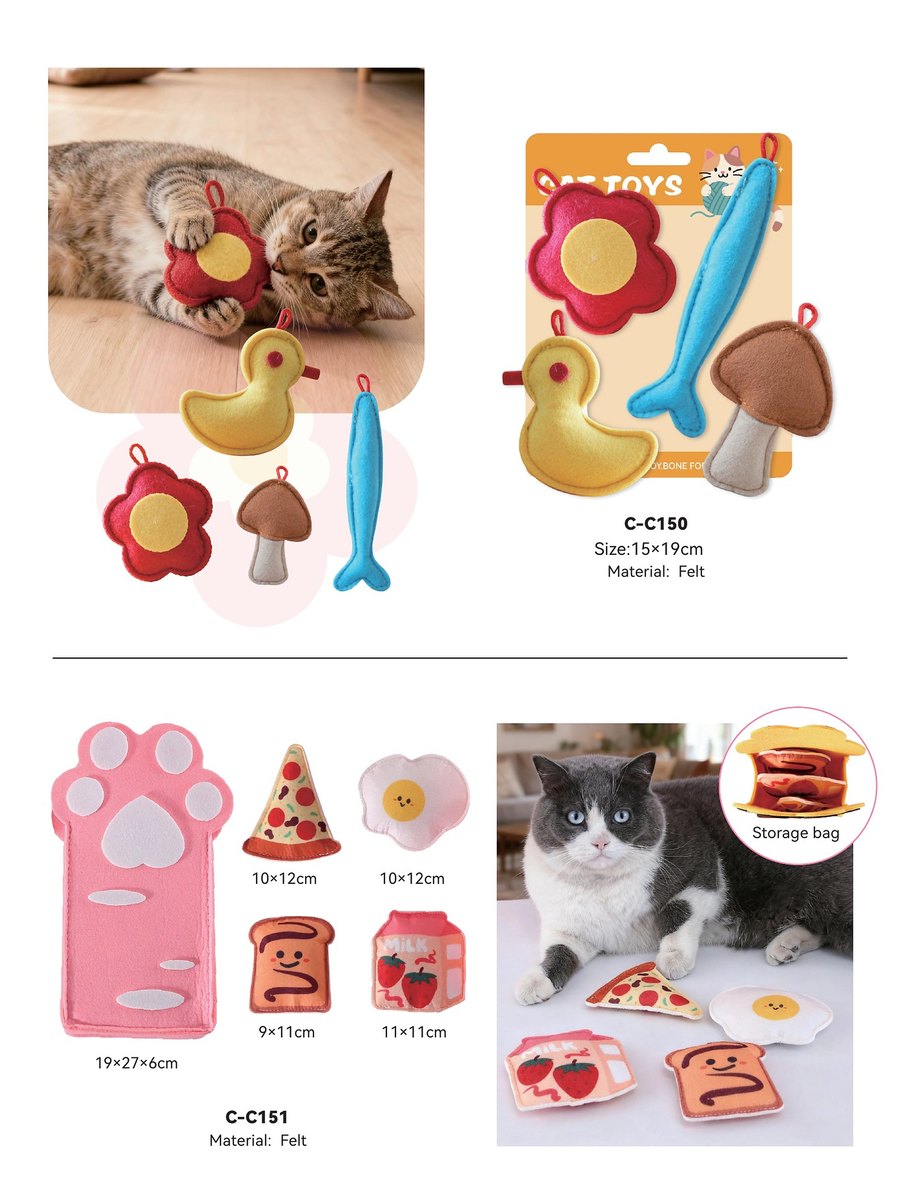
Catnip toys for retailers and private-label brands
For buyers, catnip content is only one part of the specification. Ask the supplier about fabric weight, seam construction, filling containment, detachable components, labeling and sample testing. For refillable designs, confirm that the closure remains inaccessible during normal play.
PawMivo's plush and catnip toy collection includes felt sets, kicker toys and refillable options. OEM and ODM projects can customize shape, fabric, filling and packaging. Request samples and evaluate the finished construction before placing a bulk order.
Frequently asked questions
Can cats become addicted to catnip?
Catnip is not generally considered addictive. Cats commonly lose interest after a brief response and may not react again for a period. Individual behavior still matters: stop using it if your cat becomes distressed or unusually aggressive.
Is catnip suitable for kittens?
Many young kittens do not respond to catnip. If you offer a catnip toy, choose one that is suitable for the kitten's size, supervise play and focus on construction safety rather than expecting a reaction.
Can I leave a catnip toy out all day?
A durable toy may be appropriate for some cats, but rotating it helps preserve novelty and lets you inspect it for damage. Toys with loose strings, detachable parts or opened seams should never be left accessible.
Sources and further reading
This article summarizes general safety guidance; it is not a diagnosis or a substitute for veterinary care.
If your cat has persistent vomiting or diarrhea, severe lethargy, trouble breathing, tremors, or may have swallowed part of a toy, contact your veterinarian or an animal poison-control service promptly.
Build a safer catnip toy line
Explore felt sets, kicker toys and custom catnip designs. Samples are available before bulk orders.
View Plush & Catnip Toys Request a Catalog