How to Get Your Cat to Use a Scratching Post or Cat Tree

"I bought a scratching post and my cat completely ignores it." We hear this from pet owners constantly — and from retailers who get the question at the counter every week. Here's the good news: in most cases the cat isn't stubborn and the post isn't broken. The setup is wrong in one of three predictable ways, and each one has a straightforward fix.
First, rule out the three deal-breakers
Before any training, check the post against what cats actually need. From our factory's design testing, an ignored post almost always fails one of these tests:
- Too short. Cats need to stretch their full body length while scratching. Most adult cats want a scratching surface of roughly 70 cm (28 in) or more — a 40 cm kitten post won't survive contact with a grown cat's standards.
- Wobbly. A post that tips or rocks when leaned on feels unsafe, and a cat that got startled once will remember. The base needs to be heavy enough to hold still under a full-weight adult cat.
- Wrong texture or wrong spot. Some cats want sisal, some want cardboard, carpet or wood — and nearly all of them want the scratcher in a room where people actually spend time, not hidden behind the washing machine.
If the post passes all three tests but is still ignored, it's a habit problem — and habits can be trained. Here's the routine we recommend.
Step 1: Put the post where the scratching happens
Cats scratch to mark territory and to stretch right after waking up, so the highest-traffic spots win: beside the sofa, near the bed, by the favorite window. If your cat has already scratched somewhere "wrong," place the post directly on or next to that exact spot. You can move it a few inches at a time later, once the habit is established — but location first, aesthetics second.
Step 2: Make the post impossible to ignore
A new post smells like a warehouse, not like home. Make it interesting:
- Sprinkle a little catnip or silvervine on the base and scratching surface.
- Drag a wand toy up and along the post so your cat pounces and accidentally digs claws into it — that first satisfying scratch does more than a week of coaxing.
- Place the post between your cat and something they already love: a window, a perch, the morning sun spot.
Step 3: Reward the first scratches — and every one after
The moment your cat uses the post, mark it calmly and pay up: a treat, a short play session, or genuine praise. Timing matters — reward within a couple of seconds so the connection sticks. What you should never do is grab your cat's paws and rake them down the post. Forced scratching reads as a trap, and it teaches cats to avoid the post entirely.
Step 4: Protect the old target while the habit forms
While your cat is learning, make the previous target less appealing: cover the sofa arm with a throw blanket or furniture-safe double-sided tape, and keep rewarding every post use. Once the post has a two-week track record, gradually move it to wherever you both prefer — a few inches every couple of days, never a dramatic relocation.
One scratcher is rarely enough
Multi-cat homes need one scratcher per cat, minimum, and even single cats tend to use posts more when there are two options — a tall vertical post in the living room and a horizontal or angled scratcher wherever they nap. If your cat also loves to climb, a properly sized cat tree combines the scratching surface with perches and beds, which is usually the best long-term value.
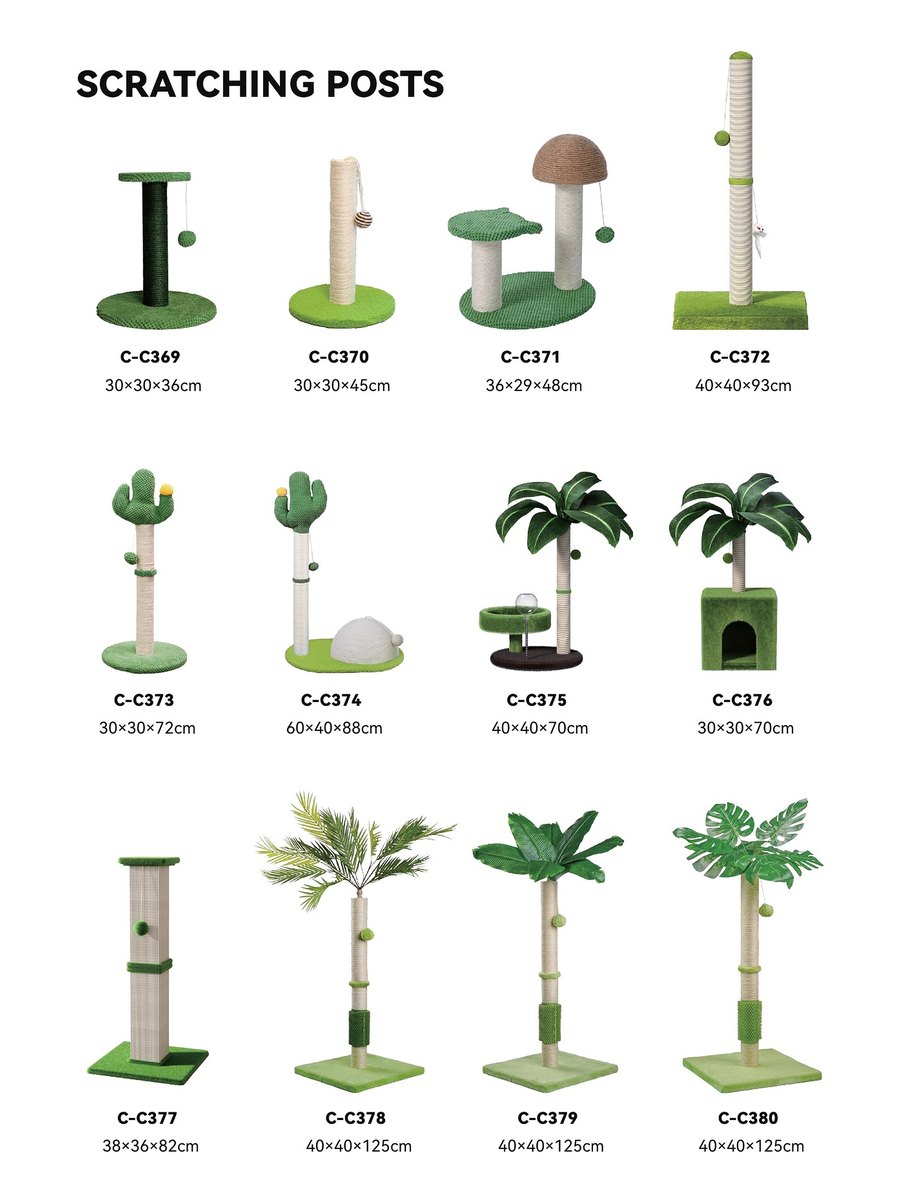
Our scratching collection covers tall sisal posts, cardboard loungers and angled scratchers in the same range, so households can mix textures until each cat finds a favorite — and if your cat is scratching the sofa itself, read our guide on why cats target sofas and how to redirect them.
Buying scratchers in bulk or for your brand?
Scratchers are one of the most practical repeat-purchase categories in cat supplies, and quality shows up fast in reviews: stable bases and tightly wound sisal are the two details owners mention most. We manufacture sisal and cardboard scratcher series with full OEM and ODM support — custom colors, private-label branding and packaging — with samples available before bulk orders and flexible, category-dependent MOQs. Email us for the catalogue, pricing and lead times.
Find scratchers cats actually use
Sisal posts, cardboard loungers and angled scratchers — samples available for retailers and brands.
View Scratching Collection Email Sweety