Wholesale Dog Toys for Small Businesses: Build a 6-SKU Starter Assortment
Quick answer
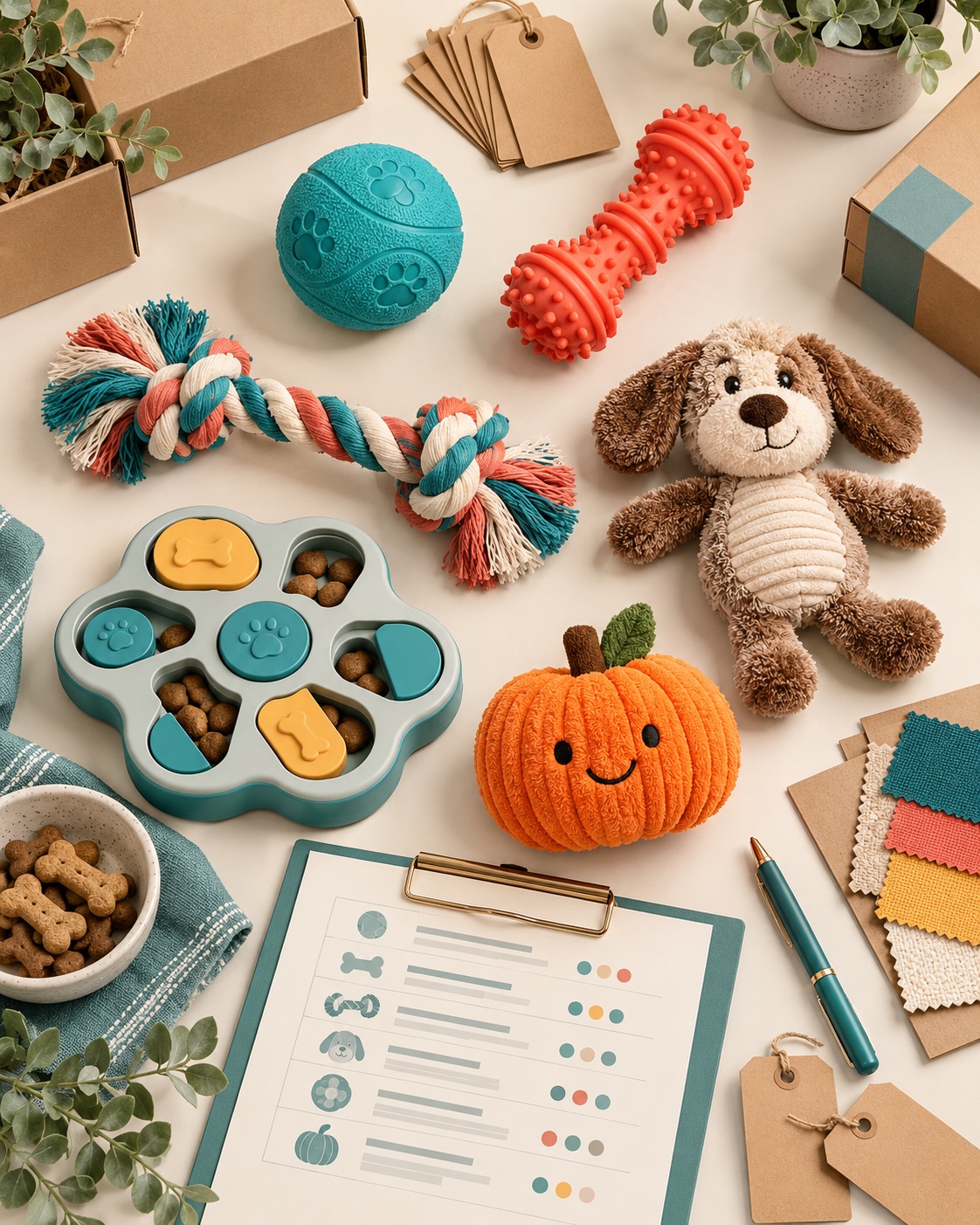
A small pet retailer does not need dozens of similar dog toys to test the category. Start with six clearly different play jobs: fetch, chew or treat, tug, plush, enrichment and seasonal or giftable. Choose one strong SKU for each job, keep first-order colors and sizes tight, and use actual sales, reviews and customer questions to decide what earns a second SKU.
Searches such as “wholesale dog toys for small business,” “bulk dog toys for pet stores” and “private label dog toys low MOQ” point to the same buyer problem: how do you create enough variety without spreading cash across too many slow-moving products?
The answer is not to copy a large chain’s dog-toy wall. A small store, Shopify brand, Amazon seller, groomer, trainer or subscription-box business needs a compact assortment in which every SKU has a clear reason to exist. This guide shows how to build that first range and how to brief a dog toy supplier without pretending that one mix works for every market.
Why a focused dog toy assortment can compete
A six-country pet-toy survey reported by GlobalPETS found that specialty stores and online retailers are both important purchase channels, while product reviews, recommendations and packaging can influence selection. It also found low absolute loyalty to toy brands. That does not guarantee sales for a new label, but it does suggest that a useful product story, clear merchandising and credible reviews can matter more than simply offering the largest range.
For a small retailer, focus creates practical advantages:
- Customers can understand the differences quickly.
- Staff can explain each toy’s intended play style.
- Online listings are easier to photograph and compare.
- Inventory is concentrated behind fewer, better-defined options.
- Reorder decisions are based on cleaner sales data.
The six-SKU wholesale dog toy starter mix
This is a planning framework, not a fixed buying formula. Replace a category when your audience has a clearer need—for example, a trainer may add a second tug toy before a seasonal plush design.
1. Fetch: an easy-to-understand ball or retrieval toy
Fetch is a familiar entry point and works well in product images, demonstrations and outdoor merchandising. Choose the first SKU around a clear benefit: bounce, visibility, water play, launcher compatibility or a material story. Avoid trying to promise every benefit in one product.
Confirm dimensions, weight, material, intended dog-size guidance, bounce or float expectations, color options and packaging. Browse PawMivo’s ball and fetch dog toy series for possible starting platforms.
2. Chew or treat: a purpose-led rubber, TPR or nylon format
A chew-oriented SKU should be positioned by intended use rather than vague claims such as “indestructible.” Decide whether the product is primarily for chewing, treat dispensing, licking or interactive play. The construction, hardness, openings and size should fit the intended use and target dog segment.
Ask how material, color, molding, surface texture, treat opening and logo method affect the specification. Compare options in the chew and treat dog toy collection.
3. Tug: one rope or mixed-material interactive toy
A tug product adds owner-and-dog interaction to the assortment. Rope diameter, fiber, knot construction, handle shape and attached components all affect how the product feels and displays. A simple two-knot rope may suit a value position; a mixed-material tug can support a more distinctive story.
Confirm finished length, rope diameter, fiber composition, colorfastness questions, seam or attachment construction and care instructions. See the rope dog toy series.
4. Plush: a soft, giftable squeaky design
Plush adds emotion and visual personality. It can also create clear seasonal and gifting moments. For a first range, choose one shape with a readable silhouette and a price point that fits your audience instead of launching a family of near-identical characters.
Review fabric, filling, squeaker or crinkle components, seam construction, embroidery, size and packaging. If you want a private-label character later, sales from the first plush SKU can help define the right size and price. Explore plush, durable and puzzle dog toys.
5. Enrichment: one puzzle, snuffle or treat-hiding product
An enrichment SKU gives the collection a different shopping mission from fetch or chewing. The product page should explain how the activity works, how food or treats are loaded, the approximate setup and cleaning routine, and that play should be supervised where appropriate.
Confirm materials, moving or removable components, difficulty concept, cleaning method, package dimensions and instructions. Keep the first design easy to demonstrate in a short video or three-image sequence.
6. Seasonal or giftable: a controlled test, not permanent depth
A Halloween, Christmas or occasion-led toy can create urgency and fresh visual merchandising. The risk is timing: late delivery shortens the selling window. Start with a modest, clearly scheduled program and decide in advance how leftover stock will be handled.
Approve artwork, colors and packaging early; work backward from the in-store or online launch date; and leave time for samples, production, shipping and receiving. PawMivo’s seasonal dog toy range shows possible program directions.
How to choose the right six products for your customer
Control SKU count before it controls your cash
Six products can become eighteen SKUs when each has three colors. Add two sizes and the range becomes thirty-six inventory positions. That multiplication affects product minimums, packaging, cartons, photography, listings, barcodes, forecasts and reorders.
For a first order, choose a “hero configuration” for each product:
- One primary size based on the dog segment you serve most often.
- One or two colors with a deliberate retail story.
- One packaging format that fits the sales channel.
- One written specification linked to the approved sample.
If your audience genuinely needs two sizes, consider reducing color variants. If color is the brand signature, keep size count tight. The previous PawMivo guide, Pet Toy MOQ: How to Plan Your First Private-Label Order, explains why minimums may apply per design, color, size, component and package.
Wholesale first or private label first?
| Route | Best when | Main trade-off |
|---|---|---|
| Ready-to-sell wholesale | You need fast testing, smaller commitments or immediate store variety. | Less control over exclusivity, product details and branding. |
| Private label on an existing design | You know the category and want your logo, label or packaging on a proven platform. | Product and packaging minimums may be separate. |
| OEM modification | You have evidence that a specific size, color, material or feature will improve the offer. | More sampling, specification control and setup. |
| ODM development | You have a differentiated concept, budget and time for development. | Highest complexity, validation work and inventory risk. |
A small business does not have to choose one route forever. You can test categories with wholesale stock, move proven roles to private label, and reserve full custom development for a concept supported by real demand. Read our OEM, ODM and private-label pet toy guide for the cooperation models.
Merchandising the range online and in store
Organize by play job, not only by material
“Fetch,” “tug,” “chew,” “comfort” and “enrichment” are easier shopping cues than a wall labeled only with TPR, cotton and polyester. Materials still matter, but the customer usually begins with a use case.
Show comparison information consistently
Use the same fields across listings: dimensions, material, intended play style, suggested dog-size context, care, supervision notes and what is included. Consistent information helps a shopper compare without guessing.
Give each SKU a demonstration asset
A short fetch clip, treat-loading sequence, tug demonstration or puzzle setup can explain the product faster than generic lifestyle copy. Collect media requirements before packaging is finalized so the sample can be photographed correctly.
Plan the price ladder deliberately
Include an accessible add-on, a mid-range everyday product and a higher-value enrichment or giftable item if that fits your market. Compare landed cost, channel fees, promotions, returns and target margin before choosing retail prices.
Safety and compliance questions for the sourcing brief
Dog toys are not children’s toys, and requirements vary by product, material, market and sales channel. Do not copy a certificate list from another category or assume one report covers every color and construction. Ask qualified compliance support to identify the rules that apply to the exact product and destination.
For U.S. business guidance, the Consumer Product Safety Commission explains certification obligations for regulated general-use products when applicable. In the EU, the General Product Safety Regulation provides a general safety framework for non-food consumer products sold offline and online. Treat these as starting points, not a substitute for product-specific legal advice.
Your supplier brief should identify material and component specifications, construction points to review, labeling and traceability needs, test-report scope, packaging warnings or instructions, and how changes will be controlled after sample approval. Avoid unsupported claims such as “non-toxic,” “indestructible” or “certified” unless the claim is properly defined and substantiated for the product and market.
Dog toy supplier RFQ checklist
Send enough information for the manufacturer to quote the same project you intend to buy:
- Product category or PawMivo catalog item codes
- Quantity per design, color and size
- Target dog-size segment and intended play use
- Preferred materials, colors and key dimensions
- Logo method, label, barcode and packaging format
- Destination country and sales channel
- Required documentation or testing questions
- Target launch date and delivery window
Frequently asked questions
What dog toys should a small pet store stock first?
Start with clearly different play jobs: one fetch toy, one chew or treat toy, one rope tug, one plush toy, one enrichment toy and one seasonal or giftable design. Adjust the mix to the dog sizes and shopping occasions common in your market.
How many dog toy SKUs should a small retailer launch with?
Six focused SKUs are a practical planning model, not a universal rule. A small range is easier to display, photograph, measure and reorder. Add colors, sizes and new formats only when sales data justifies them.
Should a new store buy wholesale or launch private-label dog toys?
Wholesale stock is useful for fast testing and lower commitment. Private label becomes more attractive when you know which play types, sizes and price points sell and can support product and packaging minimums.
Can a factory mix different dog toy styles in one order?
Sometimes, but minimums may apply separately to each design, color, size, material or package. Ask for the MOQ per SKU and any separate packaging minimum before building the order.
What information should I send a dog toy manufacturer for a quote?
Send the product categories or item codes, quantity per SKU, target dog size, material preferences, branding and packaging needs, destination market, sales channel and requested delivery window.
Sources and further reading
Building a focused dog toy range?
Send the six play roles you want to cover, your target dog segment, quantities, market and branding ideas. We will suggest relevant existing designs and confirm samples, MOQ, packaging and timing for your project.
Browse Dog Toy SeriesEmail Sweety — sweety@pawmivo.com