Where to Put a Cat Tree: The Best Placement for Windows, Rest and Play
Quick answer
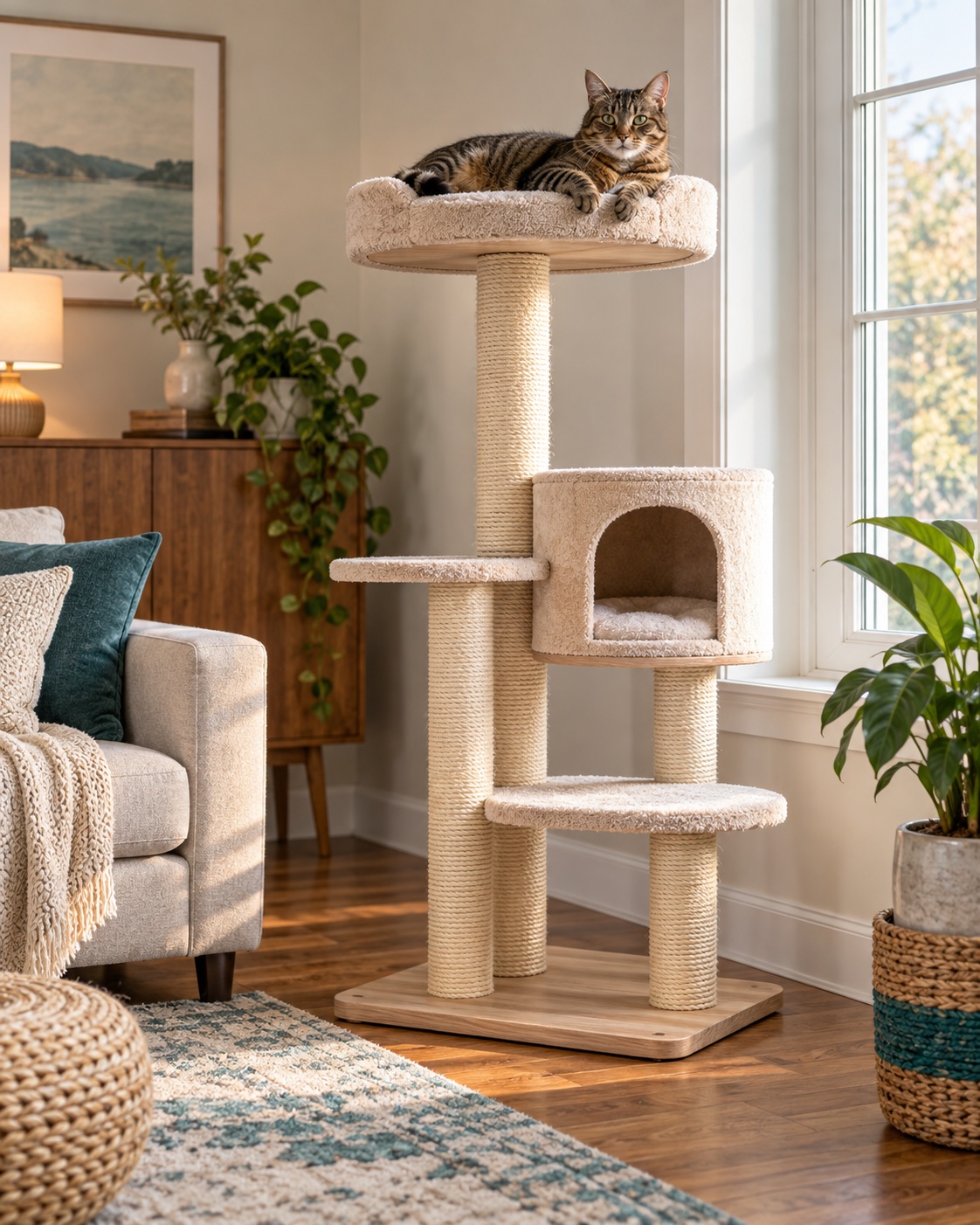
For most cats, the best place for a cat tree is beside a secure window in a room where people spend time. Put it on a level floor, with the back against a wall or stable corner, and leave a clear way on and off. Shy cats may prefer a quieter room; multi-cat homes usually need more than one elevated resource.
A cat tree can be tall, sturdy and beautifully made—and still be ignored when it sits in the wrong place. Cats choose locations for a reason: they want a useful view, a safe resting position, access to household activity and an escape route. Placement determines whether the tree becomes valuable territory or expensive furniture.
The best cat tree locations at a glance
| Location | Best for | Check first |
|---|---|---|
| Beside a secure window | Watching birds, daylight and everyday enrichment | Secure screen, blind cords, drafts and direct heat |
| Living room | Social cats that want height near family activity | Do not place in a busy walkway or beside unstable furniture |
| Bedroom | Resting, shy cats and cats attached to their person | Keep doors, closets and nighttime routes clear |
| Near a favorite sofa | Redirecting scratching and offering an approved perch | Place close enough to compete with the preferred furniture |
| Quiet retreat room | New, nervous, senior or recovering cats | Easy access, shallow steps and separation from noisy pets |
Why a window is often the first choice
A window gives height a purpose. The Ohio State University Indoor Pet Initiative describes elevated perches as important places for cats to observe their surroundings and notes that furniture or perches near windows can provide visual interest. A cat tree combines this view with scratching, climbing and sleep surfaces.
Keep the window fully secured. Tie up blind and curtain cords, confirm the screen cannot be pushed out, and avoid placing the top perch against glass that becomes extremely hot. If street noise or outdoor animals make the cat tense, move the tree to a calmer window or create a second high resting option elsewhere.
Living room placement for social cats
Many cats want to be near people without sitting on the floor. A cat tree in the living room offers a raised position for watching family activity. It can also give the cat an alternative to kitchen counters, shelves or the back of a sofa.
Choose a place with activity but not constant traffic. The center of a narrow walkway is stressful and increases the chance of accidental bumps. A wall, corner or space beside a sofa often works better because it protects one or two sides while preserving a view of the room.
Use placement to redirect scratching
If a cat scratches the sofa, placing a sturdy cat tree or scratching post beside that exact area is often more effective than hiding it across the room. Cat Friendly Homes recommends offering scratching options where the cat already scratches and near preferred resting spots.
Once the cat uses the new surface consistently, you may be able to shift it gradually—but moving it too far, too fast can send the cat back to the furniture. Read our guide on encouraging a cat to use a scratching post.
Bedroom and quiet-room placement
A bedroom can be the best place for a shy cat, a senior cat or a cat that prefers to rest near its person. Choose a quiet wall where the cat can see the doorway without being trapped behind furniture. Keep enough clearance for bedding, drawers and nighttime walking.
For kittens and senior cats, avoid forcing a large jump from the top platform to the floor. Select staggered steps, a ramp or nearby safe landing surfaces. Height matters less than easy access and stability.
Cat tree placement in a multi-cat home
One tall tower is not always enough. Cat Friendly Homes recommends multiple, separated environmental resources so cats can access important areas without being challenged. If one cat can guard the only route to the tree, the location may create tension rather than reduce it.
- Provide more than one elevated resting area.
- Avoid dead-end corners with only one route down.
- Separate perches across rooms instead of stacking every resource in one zone.
- Choose trees with several platforms and more than one usable resting surface.
- Watch whether one cat blocks the base, stairs or favorite top perch.
Stability and safety checks before placement
For a large or active cat, base width and frame construction matter as much as location. A tall, narrow tower can shift when the cat jumps sideways. Compare cat tree materials and review our cat tree height guide before choosing a model.
How to help a cat accept a new location
- Place the tree near a location the cat already uses.
- Let the cat investigate without being lifted or forced onto it.
- Use a favorite toy, treat or familiar blanket to reward voluntary visits.
- Play beside the lower platforms before encouraging higher climbing.
- If the tree remains unused, test a different window or room rather than assuming the cat dislikes cat trees.
Frequently asked questions
Where is the best place to put a cat tree?
For many cats, the best location is beside a secure window in a room where the household spends time. Use a level floor and a wall or stable corner without blocking exits.
Should a cat tree be next to a window?
A secure window can provide visual enrichment and sunlight. Check blind cords, window screens, drafts and strong heat before positioning the tree.
Can a cat tree go in a bedroom?
Yes. A quiet bedroom can work well for shy cats or cats that prefer resting near their person, provided the tree is stable and does not block movement.
Where should a cat tree go in a multi-cat home?
Use more than one area and avoid dead ends. Cats need separate elevated choices and multiple routes so one cat cannot guard the only tower.
Why is my cat not using the cat tree?
Location, wobbling, difficult platform spacing or an unappealing surface may be responsible. Move it closer to a favorite window or resting area and reward voluntary exploration.
Sources and further reading
Looking for a better cat tree range?
Explore PawMivo cat towers, condos and climbing systems, or contact us about wholesale, OEM, ODM and private-label programs.
Browse Cat TowersRequest the Catalog