How Often Should You Play With Your Cat? A Practical Daily Routine

Ask five cat owners how often they play with their cats, and you'll probably get five different answers — from "every evening" to "whenever they attack my slippers."
A useful starting point is to set aside time for interactive play in the morning and evening, then adjust to your cat's interest and energy. Some cats enjoy a longer game; others prefer a few minutes at a time. There's no need to keep them moving just to reach a time target.
Why Short, Frequent Sessions Work
Play gives your cat opportunities to stalk, chase and pounce. You may notice a burst of movement followed by a pause, then another attempt at catching the toy.
Make room for that rhythm. A pause doesn't necessarily mean your cat has lost interest — they may still be watching and preparing their next move. Cats Protection recommends short, frequent games and notes that even one or two minutes can be worthwhile. Read its guidance on cat play.
Build Play Into Your Day
Choose moments when your cat is already awake and interested in interacting. This simple schedule can help you get started:
- Before breakfast: Offer a brief game while you prepare for the day.
- In the evening: Make time for another session when you can give your cat your attention.
- Between sessions: Add a quick game when your cat invites you to play.
Treat these as opportunities, not appointments your cat must keep. If they walk away, let them finish. If they remain engaged, allow a pause before offering another round.
Adjust to Your Cat's Age and Energy
Your cat's individual preferences matter more than a fixed schedule.
- Kittens may welcome frequent opportunities to explore and play. Offer variety and use toys instead of fingers or toes.
- Adult cats can have very different play styles. One may chase a rolling ball enthusiastically, while another prefers watching a lure from behind a box before pouncing.
- Older cats may still enjoy play when it suits their mobility. Try slower movements and keep the toy within comfortable reach.
- Especially active cats may benefit from additional short sessions. Build the routine around their response rather than assuming every cat of a particular breed needs the same amount.
Make the Toy Worth Chasing
Try moving the toy away from your cat, pausing it beside a box or letting it briefly disappear behind a corner. Experiment with speed and direction until you discover what captures their attention.
Give your cat opportunities to catch the toy. Constantly pulling it out of reach can make the game less satisfying. Keep your hands clear and use an appropriate toy for grabbing and kicking.
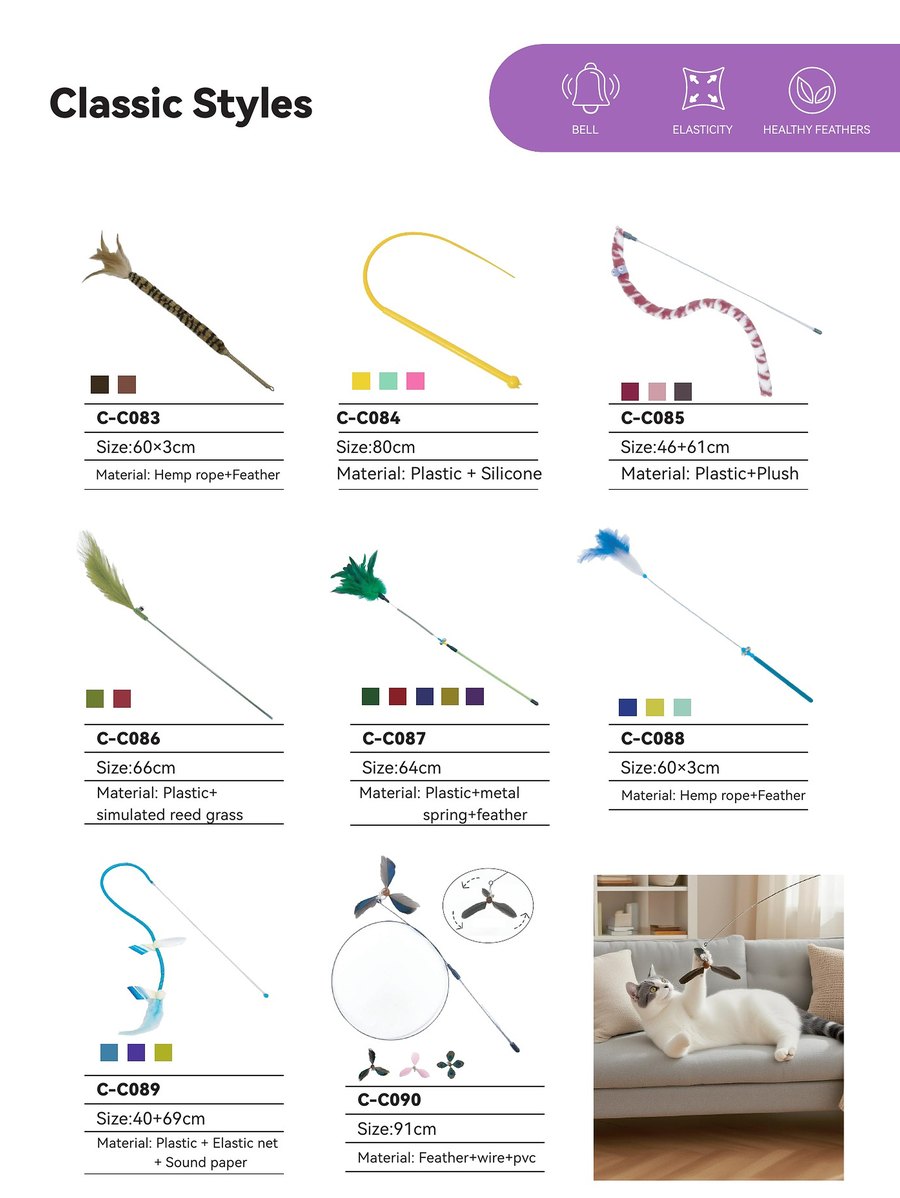
Our teasers and wands collection is a place to start when choosing toys for interactive sessions. Try different styles to learn which movements and textures your cat prefers.
Does Your Cat Need More Play?
If your cat regularly stalks your feet or grabs your arms during play, review how often they have opportunities to chase appropriate toys. Avoid encouraging games with your hands, and redirect their attention to a toy before they pounce. The ASPCA discusses these patterns in its guide to feline aggression.
Other behaviors need a broader look. Furniture scratching isn't simply a sign of unused energy. Cats also scratch to stretch, maintain their claws and mark their surroundings. Suitable scratching surfaces are an essential part of their environment. Learn more from the ASPCA.
For practical ideas at home, explore our guides to why cats scratch the sofa and how to encourage scratching-post use.
Make the Routine Easy to Keep
Store interactive toys somewhere convenient, but put wand toys, strings and ribbons out of your cat's reach after supervised play. Check toys regularly and replace damaged ones.
Keep a small selection in rotation and notice which ones your cat returns to. You don't need to introduce something new every day; changing how you move a familiar toy may be enough to renew interest.
Browse our full collection for options to complement your cat's play routine.
Sourcing Cat Toys for Your Store or Brand?
PawMivo offers cat toys for retailers and private-label brands, with OEM and ODM support, branding options and custom packaging.
Contact us for our catalog, samples, pricing and production lead times. Share your target market, preferred materials, packaging requirements and expected order quantity so we can recommend suitable options and confirm the MOQ for your project.
Build a play range that sells
Teasers, balls, plush and more — 300+ designs, samples available for retailers and brands.
View Teasers & Wands Email Sweety