Wholesale Cardboard Cat Scratchers: A Private-Label Buying Checklist
What should you check before buying cardboard cat scratchers wholesale?
Compare finished dimensions, board construction, bonding and finish, stability, replacement-pad fit, retail packaging and packed carton volume against one written specification. Approve a representative sample before production. The words “high density,” “eco-friendly” or “private label” do not establish durability, certification, a fixed minimum order quantity or compatibility with an existing refill system.
For independent pet shops, Shopify brands, Amazon sellers and importers, a scratcher is both a product and a logistics decision. A low purchase price can be less attractive once a large retail box, damaged corners or an incompatible refill is included. This guide focuses on wholesale cardboard cat scratchers as a sourcing project, rather than promising that one style will suit every cat or every shop.
Start with the PawMivo cat scratcher catalog, then ask which selected references use corrugated cardboard and which changes are feasible. Availability, construction and commercial terms must be confirmed for the exact item.
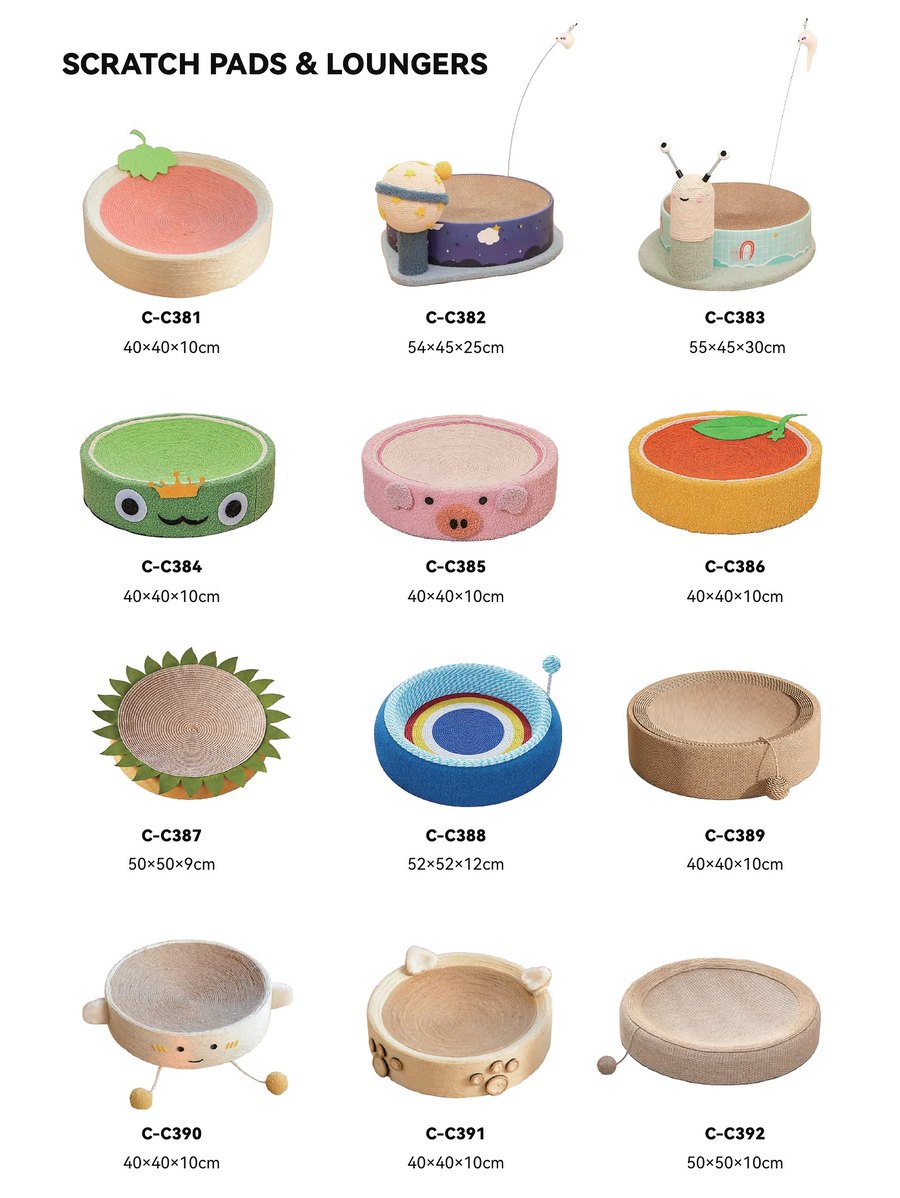
1. Choose the retail format before asking for a quote
A compact horizontal pad, a shaped lounge and a holder with a separate insert answer different customer needs. Cats Protection recommends considering a horizontal pad for cats that prefer scratching in that direction. The San Francisco SPCA also distinguishes horizontal and vertical preferences and emphasizes sturdy vertical posts. These care principles support clear product positioning; they do not prove demand for a particular wholesale design.
- Flat pad: review usable scratching area, movement on the floor and the retail-pack footprint.
- Lounge or shaped body: review overall dimensions, support, exposed edges and the packed shape, not just the front photograph.
- Holder and refill: treat the holder and replacement insert as a matched system with separate specifications and ordering terms.
Begin with distinct uses rather than several near-identical shapes. An assortment test is a buyer decision, not a forecast of sell-through.
2. Put the construction into a comparable specification
“High-density cardboard” is not enough to compare suppliers. Request the actual board specification and an agreed sample or measurement method. Ask for composition details for adhesives, printed side panels, coatings and attached components where relevant. A material name alone is not a safety or performance test result.
| Buying factor | Ask the supplier to confirm |
|---|---|
| Finished size | Length, width, height, usable surface and agreed dimensional tolerances. |
| Board and construction | Board type, orientation, thickness, layered construction and any backing or holder. |
| Bonding and finish | Adhesive and ink information, loose layers, exposed edges and attached components. |
| Intended use | Placement, assembly, inspection, replacement and disposal instructions. |
| Branding | Artwork area, print method, sleeve or box specification and barcode position. |
| Packing | Retail-pack size, units per master carton, external carton size and gross weight. |
Use the same revision of this brief for every quote. Record which features are confirmed and which remain optional or unavailable. Do not compare an unprinted stock model against a fully customized retail box as if the two prices cover the same scope.
3. Check replacement pads as their own product
Replacement scratchers are an established product format: for example, Ware Pet Products lists a reversible replacement corrugated scratcher. That example does not show that different brands or holders share dimensions, nor that PawMivo supplies a compatible insert.
For a proposed refill program, ask for the insert's finished size, fit tolerance, retaining method, usable faces, pack quantity and labeling. Check the actual holder and insert together. Obtain separate minimum quantities, replenishment terms and sample approval for the refill. Do not print “universal replacement” unless that precise claim has been substantiated.
4. Compare carton volume, not only the unit price
Ask for outer carton measurements in metres. Multiply length × width × height to obtain cubic metres per carton, then divide by the number of retail units in that carton for a packing-volume comparison. For example, a hypothetical 0.60 × 0.40 × 0.40 m carton has a volume of 0.096 m³; with 12 retail units, that is 0.008 m³ per unit. This is arithmetic for planning, not a PawMivo packing specification or a freight quote.
A freight provider must confirm chargeable weight, service limits and the complete delivery cost. Separately review protection against corner crushing, surface rubbing and movement inside the carton. If nesting or compressed packing is proposed, confirm how the product is restored and whether the approved retail presentation is preserved.
5. Keep environmental and certification claims specific
Separate the scratcher's board, coatings, accessories and retail packaging. Ask which component a recycled-content statement refers to and what documentation supports it. Do not turn the word “cardboard” into an automatic claim that the entire finished product is recyclable, biodegradable or certified.
If an FSC claim is proposed, check the supplier and the product scope rather than relying on a logo in a presentation. FSC's own guidance for promotional licensing calls for supplier verification, product evidence and coverage within the certificate scope. Applicable labeling and trademark arrangements must be checked for the actual supply chain. This guide makes no claim that PawMivo or the pictured products hold FSC certification.
6. Approve the sample and the retail listing together
Compare the sample with your written specification: dimensions, assembly, fit, appearance, loose layers, visible adhesive, printed artwork, packaging and instructions. Agree any tests and inspection criteria separately. Handling a sample is not laboratory certification and does not support an unconditional safety or lifespan claim.
Your listing should show dimensions clearly, explain what is included and state whether the scratching surface is reversible or replaceable only when confirmed. Use photographs of the approved configuration. For wider sourcing questions, see the pet-product MOQ guide and OEM and private-label overview.
Frequently asked questions
What is the MOQ for private-label cardboard cat scratchers?
There is no single MOQ that applies to every model. Confirm quantities per design, size and print version, and ask separately about printed packaging minimums, setup costs and samples.
Can I put my logo on an existing scratcher?
Ask whether the selected model supports a printed side panel, sleeve, label or custom box. Each method needs a confirmed artwork area, material specification, cost and sample approval; a logo option does not mean a new shape is included.
Are replacement scratcher pads interchangeable?
Do not assume so. Confirm the insert dimensions, tolerance, retaining method and holder reference, then approve the insert and holder together. Compatibility must be established for the specific system.
How can I compare shipping costs before ordering?
Request retail-pack dimensions, external master-carton dimensions, units per carton and gross weight. Ask a freight provider to quote the same destination and delivery scope; carton volume alone is not the final freight charge.
Request a focused scratcher quotation
Email Sweety with your preferred item codes or reference images, intended format, quantities per design, destination country, packaging and branding needs. For a refill program, include the holder and insert dimensions. We will review the available options and confirm pricing, samples, minimum quantities and estimated lead times for the specific enquiry.
Email Sweety — sweety@pawmivo.comPrefer to write it yourself? sweety@pawmivo.com · +86 134 5447 1112
Sources and editorial scope
Sources checked October 29, 2026. Product examples establish available formats, not search volume or sales growth. This evergreen purchasing checklist does not claim a measured search trend, veterinary endorsement, certification, test result or confirmed PawMivo specification.